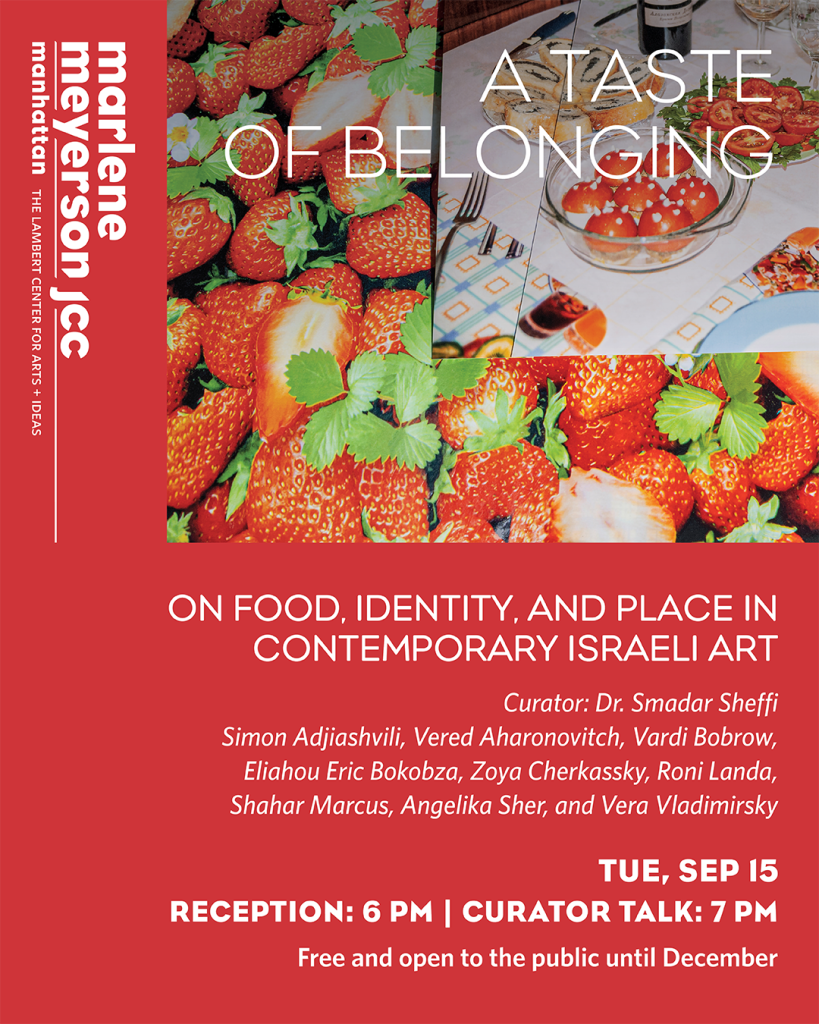
A Taste of Belonging
On Food, Identity, and Place in Contemporary Israeli Art
Curator Dr. Smadar Sheffi
It was a mouthful of madeleine cake dipped in tea that triggered Marcel Proust’s famous journey down memory lane in In Search of Lost Time. Taste is a powerful sensory cue, capable of unlocking memories of place and time and, above all, emotion.
It is precisely this quality that makes food such a potent signifier of identity. We are, in a sense, what we eat—and how we eat. In Israel, both have been in constant flux, reflecting the dynamics of an immigrant society in which East and West, secular and religious traditions, continuously meet, influence one another, and often merge to create new cultural forms.
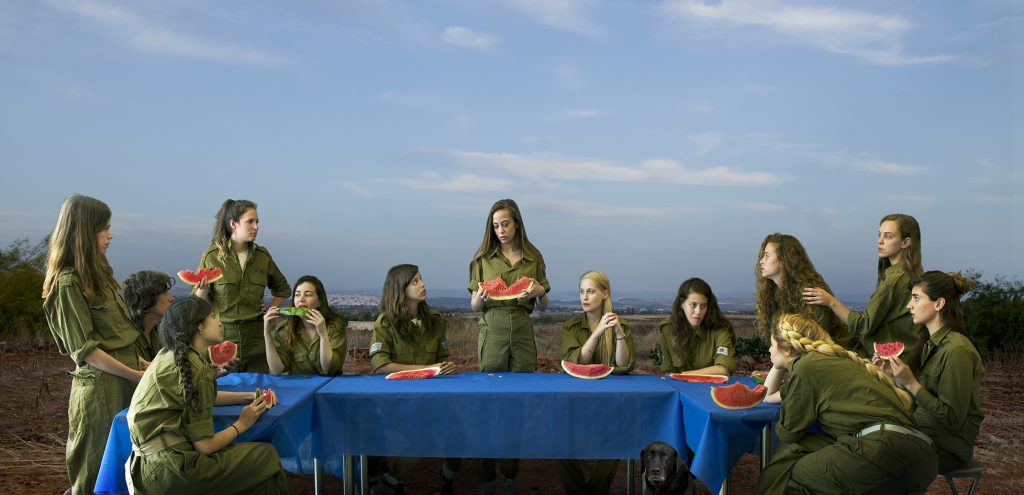
The eight artists featured in this exhibition explore the Jewish-Israeli relationship to food, revealing a far richer landscape than the hummus–tahini–falafel triad that long served as its semi-official culinary emblem.
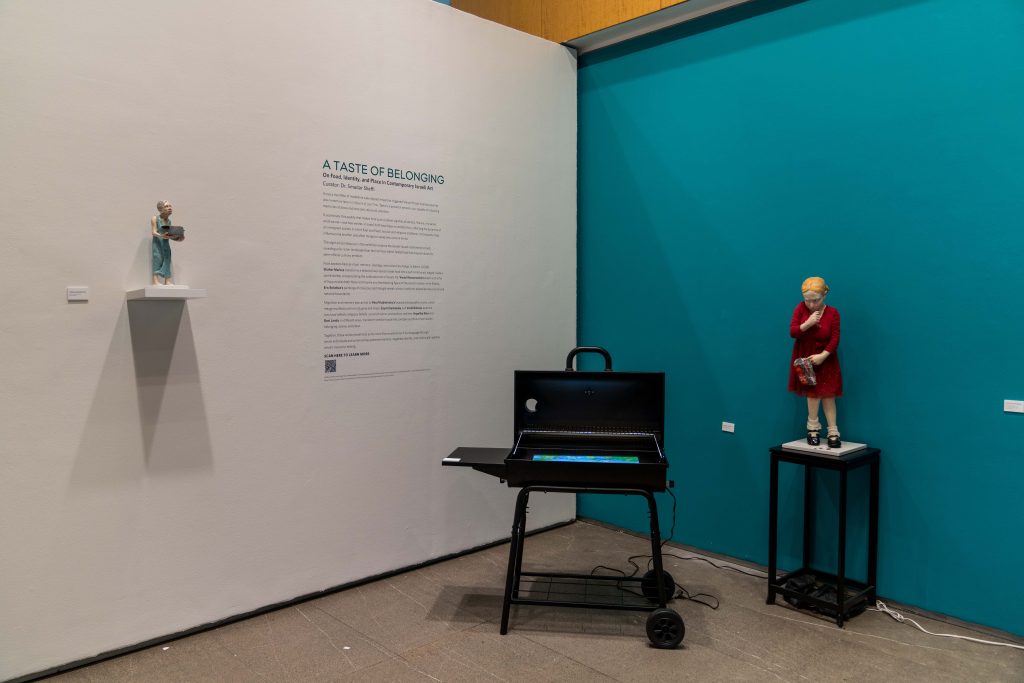
Food appears here as ritual, memory, ideology, and cultural exchange. In Sabich (2008), Shahar Markus transforms a beloved Iraqi-Jewish street food into a performative act staged inside a bomb shelter, encapsulating the contradictions of Israeli life. Vered Aharonovitch’s Mom with a Pot of Soup evokes both historical trauma and the enduring figure of the Jewish mother, while Eliahou Eric Bokobza’s paintings of couscous and mangal reveal culinary traditions shared across cultural and national boundaries.
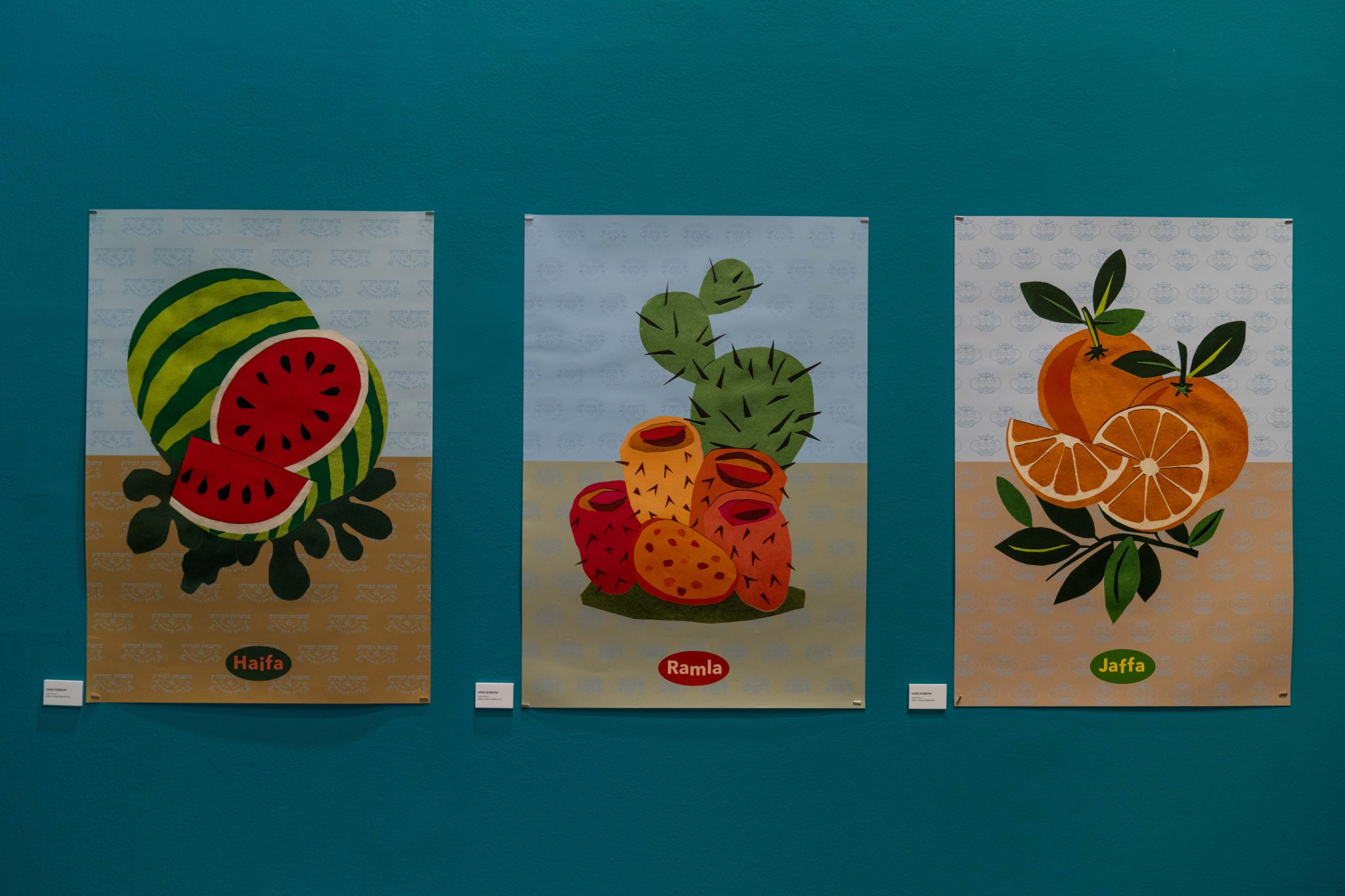
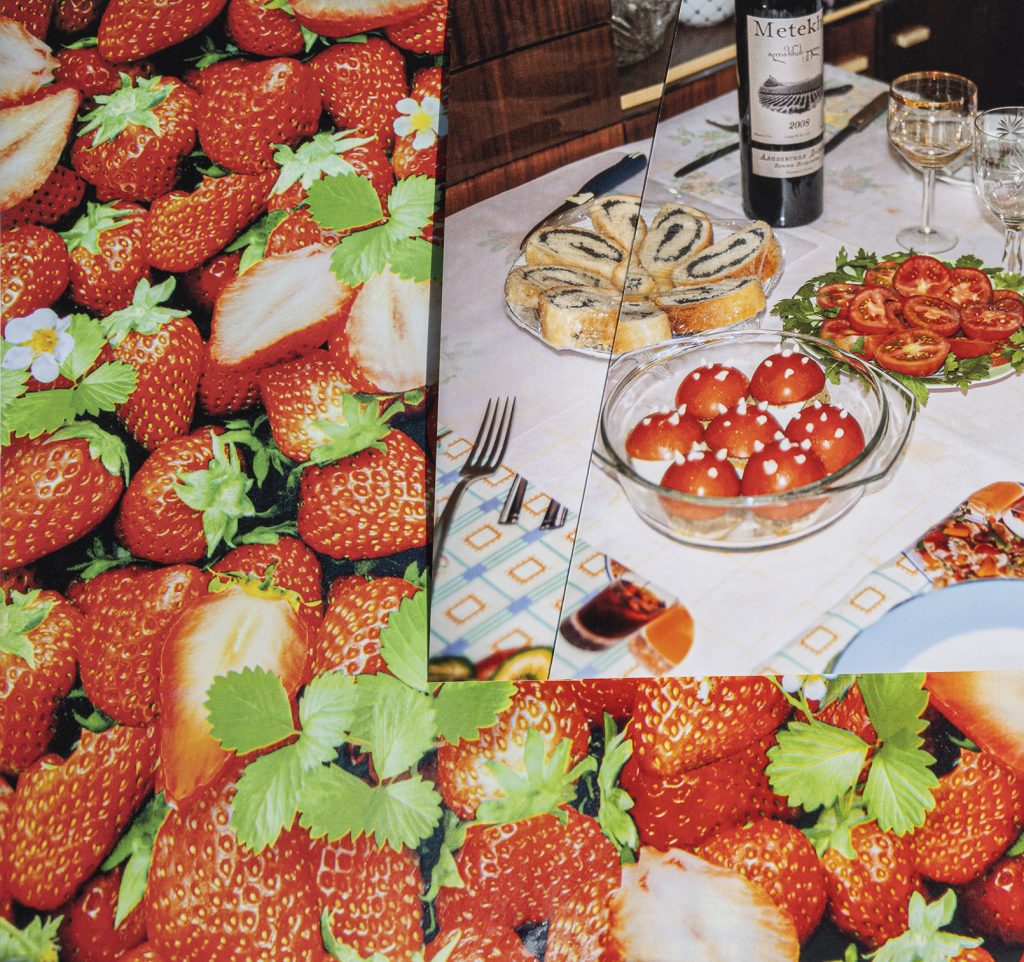
Migration and memory are central to Vera Vladimirsky’s layered photographic works, which merge recollections from Ukraine and Israel. Zoya Cherkassky-Nnadi and Vardi Bobrow examine the ways food reflects religious belief, social divisions, and political realities. Angelika Sher and Roni Landa, in different ways, transform familiar foods into complex symbols of spirituality, belonging, desire, and place.
Together, these works reveal food as far more than sustenance. It is a language through which individuals and communities preserve memory, negotiate identity, and continually redefine what it means to belong.
Acknowledgements
Special thanks to Udi Urman, Director of the David H. Sonabend Center for Israel and the Lambert Center for Arts + Ideas at the Marlene Meyerson JCC Manhattan, for his support, enthusiasm, and friendship.
Thanks to Stephanie Butnick for moderating an intelligent and witty discussion at the opening event .
Photography credit : DADA STUDIO
Simon Adjiashvili
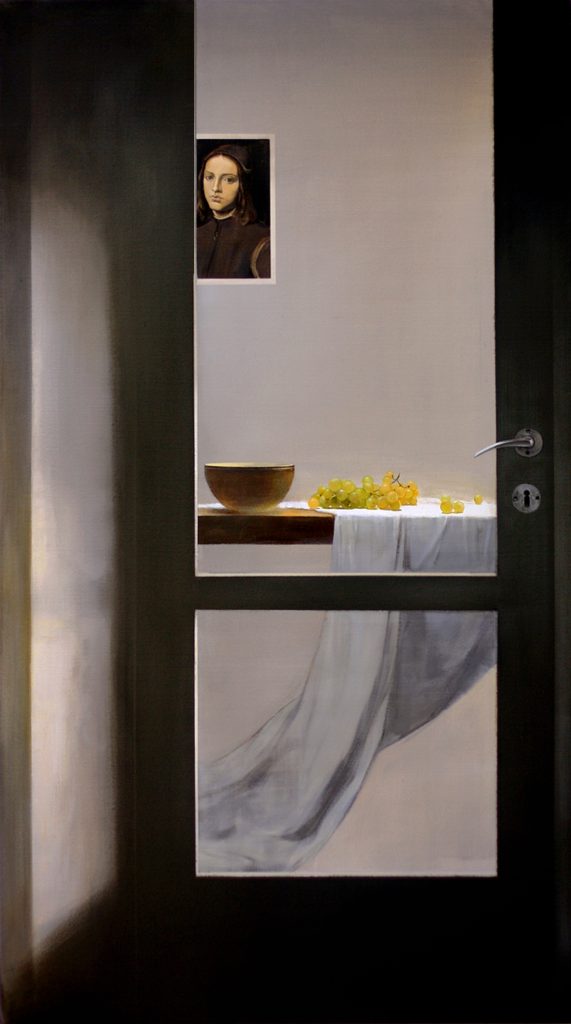
Grapes, lemon, half an apple and a plastic chair.
Curator Dr Smadar Sheffi
A sliced apple, a lemon, a cluster of grapes, a bowl resting in the half-light. Food not prepared for a communal meal, stripped of ceremonial or ritual significance, strangely suspended, as if momentarily forgotten. In Simon Adjiashvili’s paintings, sparse interiors are transformed by light into vessels of memory, poised between intimacy and estrangement. The fresh fruit is the only trace suggesting that someone occupied these spaces just moments ago.
Within the Israeli context, where personal and collective histories are marked by movement, displacement, and continual reinvention, these quiet interiors acquire particular resonance. They suggest belonging not as a fixed condition, but as a fleeting experience: delicate, provisional, and luminous as light falling across a table.