מיכל היימן: סימני פיסוק______? | Michal Heiman: Punctuation Marks______?

For English press here.
For Catalogue Press Here לקטלוג לחצו כאן 

מיכל היימן: סימני פיסוק______?
אוצרת: סמדר שפי 

גלריה דואק, משכנות שאננים
פתיחה 19/05/2025 נעילה מאי 2026

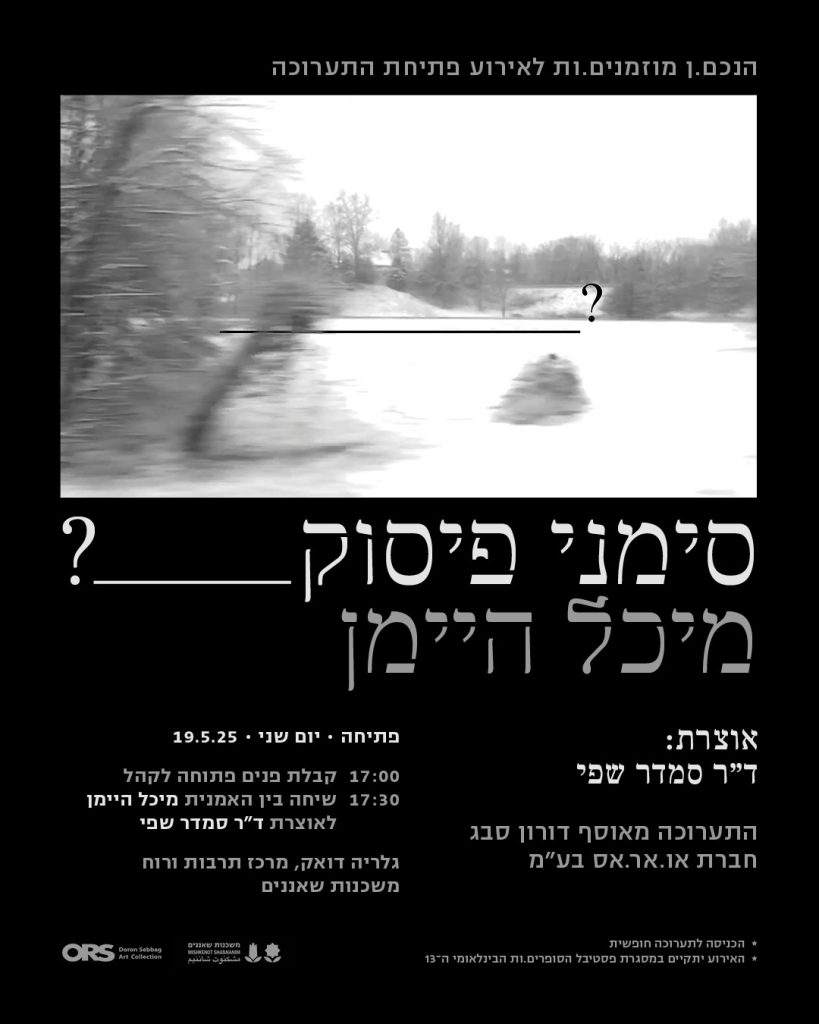
קו ארוך, שבקצהו סימן שאלה. תמיהה, שלפניה רִיק, מחיקה, או סימון של תדר מתמשך אינסופי – מעבר לטווח השמיעה הרוֹוח. קשב למה שלא נאמר, שהודחק או הושתק או נלחש מאפיין את האמנות של מיכל היימן לאורך השנים.

התערוכה עוקבת אחר מערכת היחסים בין גוף, טקסט ואובייקט, העוברת כחוט השני ביצירתה של היימן למעלה מארבעה עשורים. יחסים מיוחדים אלו יוצרים חלל וזמן בעלי חוקיות פנימית: מקומות, זיכרונות או חלומות, שאינם כבולים למהותם הפיזית, וזמן שאינו לינארי. החוקיות האלטרנטיבית מאפשרת עיסוק בטראומה והתבוננות ביקורתית. באמצעות ארכיון החומר שצברה היימן מתפענחים מחדש סיפורים ורגעים ומתערערות תפיסות הגמוניות.

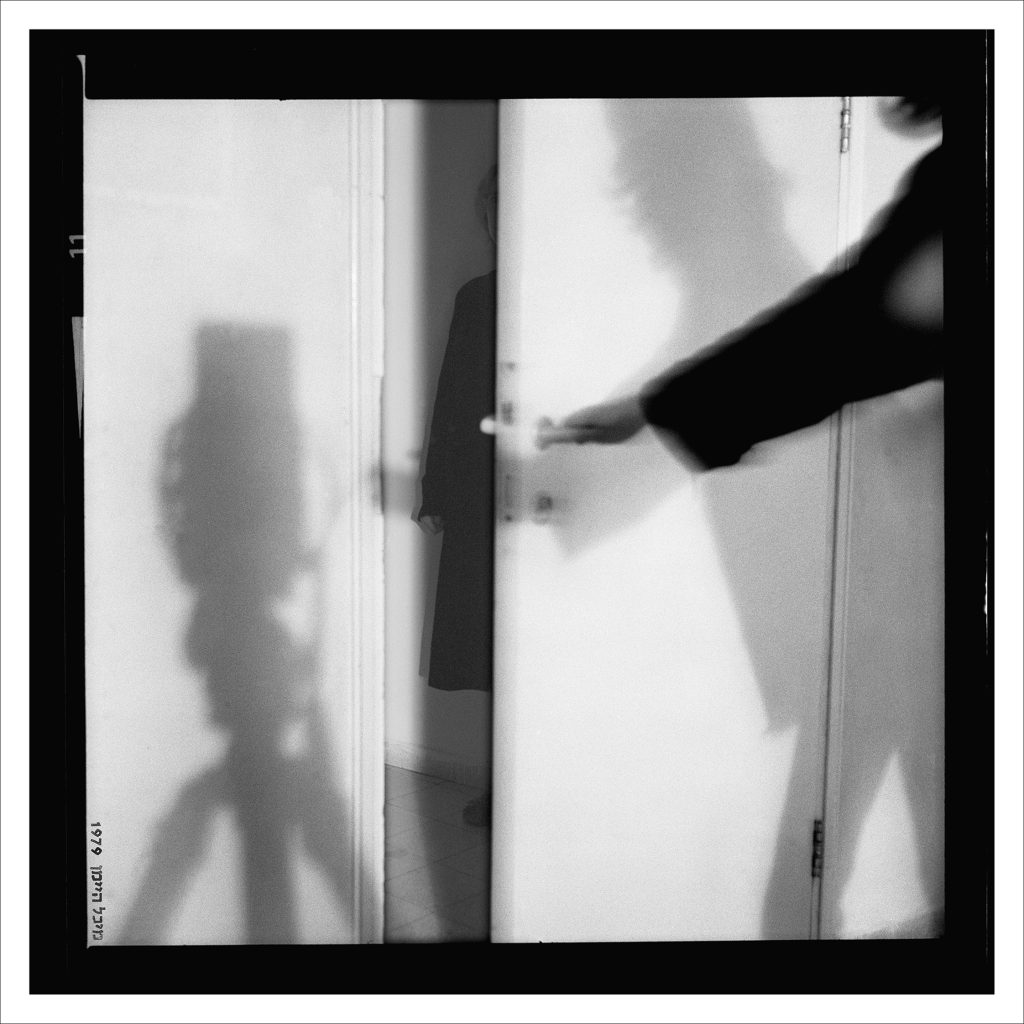
חיפוש אחר נקודות אחיזה, יחסי גוף-אובייקט בלתי פתורים ותדר, שנדמה ככזה החורג מטווח השמיעה – כל אלה נוכחים כבר בעבודה המוקדמת בתערוכה, דיוקן עצמי עם מצלמה ודלת מ־1979, שבה מרכיב פרפורמטיבי בולט, ובמבט ראשון נדמית כאילו תועדה בה תפאורה. הזמן בתצלום נותר עמום, רגע שהגוף עצמו שכח.

סדרת הסקנוגרמות של שדרות הספרים עשויה בטכניקה שפיתחה היימן: סריקות, הנעשות בעת שהיא מתכסה בבד שחור, רוכנת מעל סורק ונעה עם תנועת הסורק, תוך שהיא אוחזת בשִדרת ספר. הכניסה תחת בד שחור מאזכרת את פעולתם של צלמים במאה ה־19. יצירת החציצה מן העולם בעת התגבשות הדימוי היא חזרה למחוזות טקסיים, בין אמנות למסתורין. לצד שדרת הספר הנסרק מבליחים חלקי גוף של היימן, יד או קטע פנים – כך שנוצר מגע בין הגוף לאובייקט. הסקנוגרמות מזכירות ניסיונות מראשית הצילום להוכיח את קיומן של רוחות רפאים. גופי הידע – הספרים – נותרים חתומים.

דיוקן עצמי עם מצלמה ודלת, 1979 הזרקת דיו ארכיונית, 116×116 באדיבות האמנית Self-Portrait with Camera and Door, 1979 Archival inkjet print, 116×116 Courtesy of the artist

טראומה, הנחוות שוב ושוב בבועת זמן מעגלית, נוכחת במיצב דיוקן עצמי, מתוך בית מחסה – השמלה (1855–2025), ובסרטים הקצרים מחפשות את סופיה, 2024, ומחפשות את לואיזה, 2023-25. בעשור האחרון התמקדה היימן במחקר אודות נשים, חלקן מזוהות ורובן אנונימיות, רבות מהן אושפזו בכפייה במאות ה־17 עד ה־20 בבתי מחסה באירופה ובארצות הברית. בשני הסרטים מופיע ונעלם קו ארוך, שבקצהו סימן שאלה. הסרטים הם מסע לשיממון שבו חיו הדמויות, למצב שבו הפכו לזרות בנפשן.

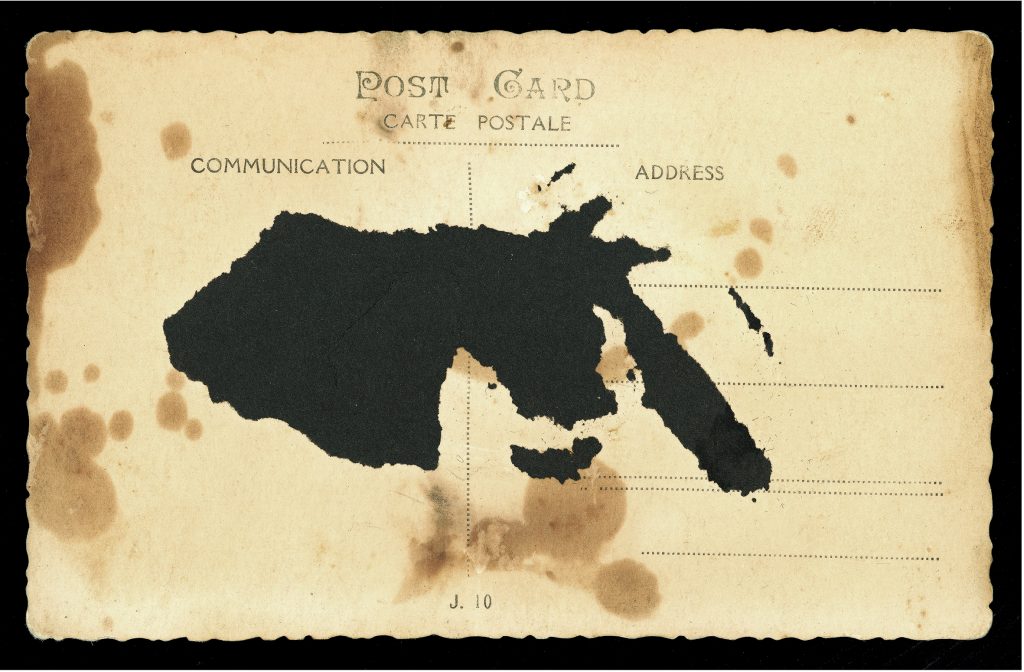
עשרים ושתיים עבודות – כמספר האותיות בשפה העברית – מהוות תערוכה שהיא טקסט מורכב. המפה הוא שמה של עבודה מ־1994. כאן המפה היא גב תמונה מודפסת, שנתלשה מאלבום. מה שנדמה כמפה אינו אלא כתם שחור – ריק, כמו הקו שלפני סימן השאלה.

Michal Heiman: Punctuation Marks______?
Curator: Dr. Smadar Sheffi

A long line ending in a question mark. Wonder preceded by a void, an erasure, or the resonance of an infinite, continuous frequency, beyond the ordinary range of hearing. An attentiveness to what is left unsaid, repressed, or whispered has characterized Michal Heiman’s art from the very outset.

The exhibition traces the interrelations between body, text, and object—a recurring motif in Heiman’s oeuvre for over four decades. This distinctive reciprocity gives rise to a space and a time governed by an internal logic: places, memories, or dreams unbound by their physical essence, suspended in non-linear time. This alternative logic enables an exploration of trauma and a critical perspective. Through the vast archive of materials gathered by Heiman, stories and moments resurface in a new light, as hegemonic perceptions are undermined.

המפה, 1994 הזרקת דיו ארכיונית, 137×210 באדיבות אוסף דורון סבג, או.אר.אס. בע"מ, תל אביב The Map, 1994 Archival inkjet print, 137×210 Courtesy of the Doron Sebbag Art Collection, O.R.S Ltd., Tel Aviv

The search for footholds, unresolved body-object interrelations, and a frequency that seems to extend beyond the audible range—all these are already present in the earliest work in the exhibition, Self-Portrait with Camera and Door (1979), which contains a conspicuous performative element and, at first glance, appears to document a stage set. Time in the photograph remains ambiguous, a moment which the body itself no longer remembers.

The Book Spine series of scanograms was created using a technique conceived by Heiman: scans made as she, draped in black cloth, leaned over a scanner while holding the spine of a book, moving in rhythm with the scanner’s passage. The act of entering under a black cloth recalls the practice of 19th-century photographers. The temporary withdrawal from the world during the image’s formation is a return to ritual realms, between art and mystery.

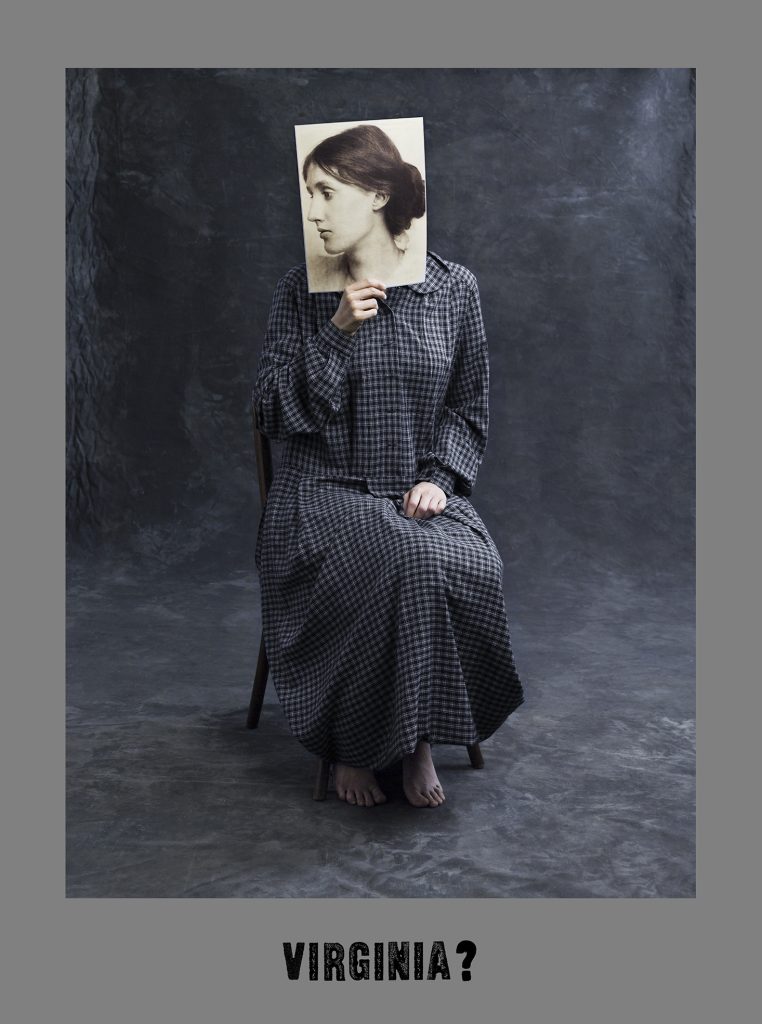
וירג'יניה? חיבור רדיקלי: קהילה של נשים, 2025-1855, 2022 מסכה: וירג'יניה וולף (נולדה בלונדון, 1882–1941), סופרת, פרט מתוך תצלום של ג'ורג' צ'ארלס ברספורד, 1902 שקף בתיבת אור וחותמת, 10×50×64 באדיבות האמנית Virginia? Radical Link: A New Community of Women, 1855–2025, 2022 Mask: Virginia Woolf (b. London, 1882–1941), writer, detail from photograph by George Charles Beresford, 1902 Transparency in light box and stamp, 64×50×10 Courtesy of the artist

Alongside the scanned book spine, fragments of Heiman’s body—her hand, or a part of her face—surface fleetingly, marking a moment of contact between body and object. Heiman’s scanograms evoke early photographic experiments that sought to prove the presence of ghosts. The vessels of knowledge—the books themselves—remain sealed.

Trauma, experienced cyclically within a looped temporality, runs through the installation Self-Portrait, from Asylum—The Dress (1855–2025) (2017), and the short films Looking for Sophia (2024), and Looking for Louisa (2023–25). Over the past decade, Heiman’s research centered on women—some identified, most anonymous—many of whom were forcibly institutionalized in asylums across Europe and the United States between the 17th and 20th centuries. In both films, a long line ending in a question mark appears and fades. The films trace journeys into the desolation these women inhabited, into the state of estrangement from their own selves.

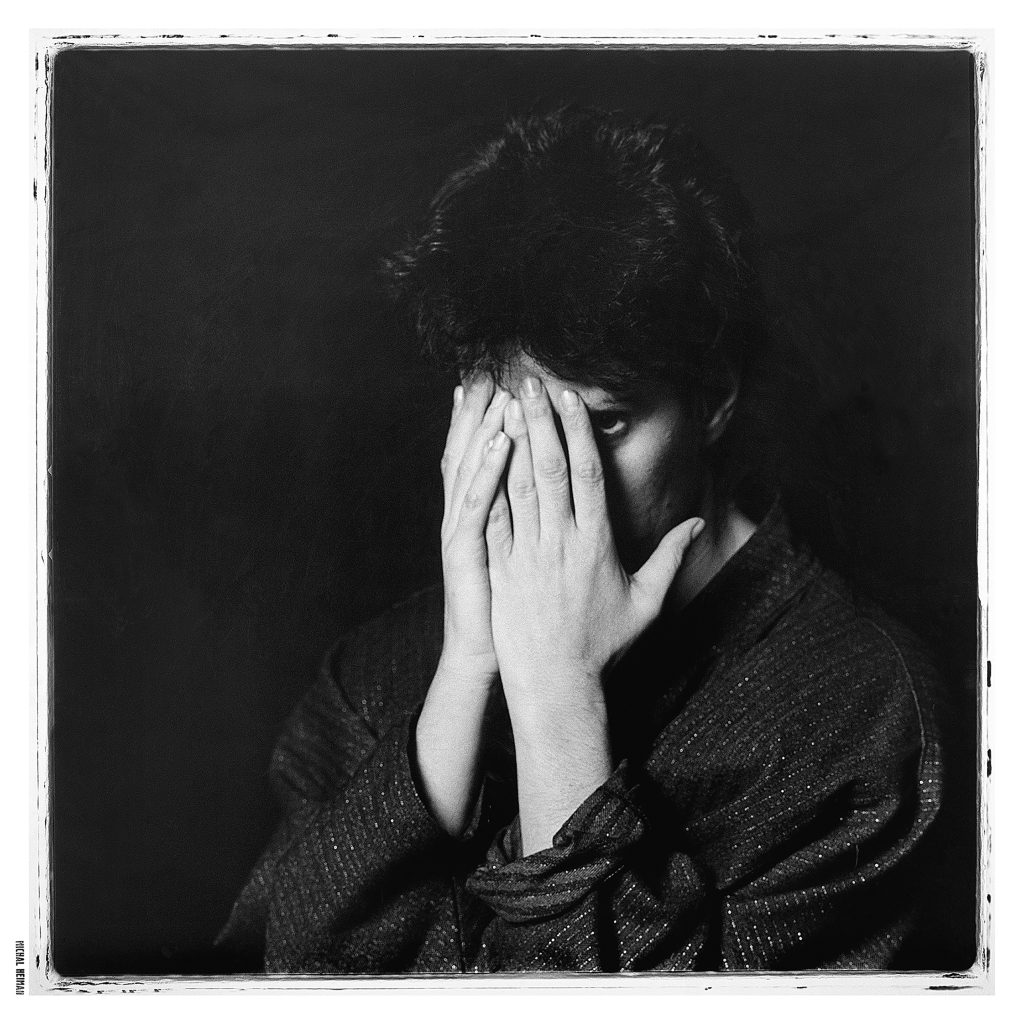
דיוקן עצמי, 12 בדצמבר, 1987 הזרקת דיו ארכיונית, 116×116 באדיבות אוסף דורון סבג, או.אר.אס. בע"מ, תל אביב Self-Portrait, December 12, 1987 Archival inkjet print, 116×116 Courtesy of the Doron Sebbag Art Collection, O.R.S Ltd., Tel Aviv

Twenty-two works—corresponding to the number of letters in the Hebrew alphabet—form Punctuation Marks______?, an exhibition that constitutes an intricate text. The Map is the title of a 1994 work. Here, the map is the verso of a printed photograph torn from an album. What appears to be a map is, in fact, a black stain—a void, like the line preceding the question mark.

PDF Catalogue of Michal Heiman: Punctuation Marks______? Curator: Smadar Sheffi

Lorem ipsum dolor sit amet, consectetur adipiscing elit. Ut elit tellus, luctus nec ullamcorper mattis, pulvinar dapibus leo.

ד״ר סמדר שפי

ד״ר סמדר שפי

סמדר שפי היא מבקרת אמנות, אוצרת וחוקרת אמנות ותרבות עכשווית. מאז 2013 היא האוצרת לאמנות עכשווית במוזיאון בית ביאליק בתל אביב.
ב 2019 ייסדה את CACR – המרכז לאמנות עכשווית רמלה והייתה האוצרת הראשית שלו עד לסגירתו ב 2024.היא מבקרת אמנות וחוקרת של אמנות ותרבות עכשווית. לשפי תואר שלישי בתולדות האמנות מהאוניברסיטה העברית והיא מרצה בבית הספר לעיצוב וחדשנות במכללה למנהל בראשון לציון ובמסגרות חוץ אקדמיות בהן ‘בית לאמנות ישראלית’.
שפי הייתה מבקרת האמנות של עיתון הארץ בשנים מ-1992 עד 2012, ושל גלי צה”ל מ-2007 עד 2023.
פרוייקטים נוספים

Accessibility