For English Click Here
לא תמיד ניסיון מעניין צולח.
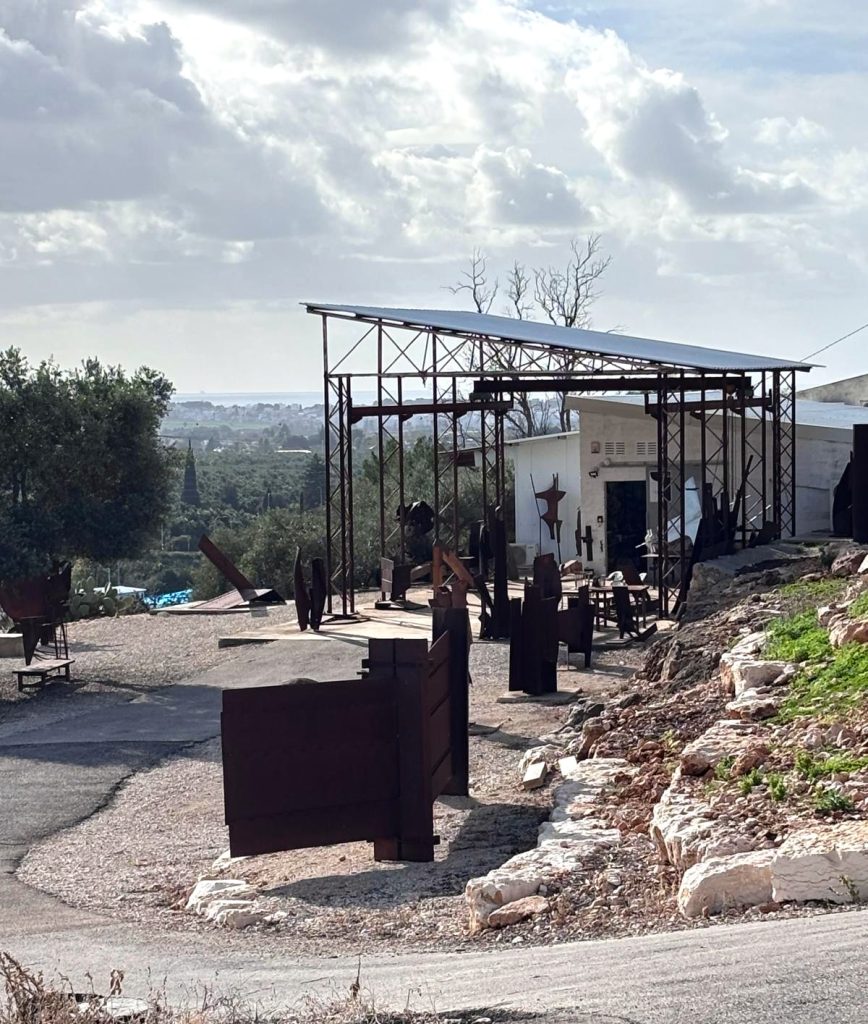
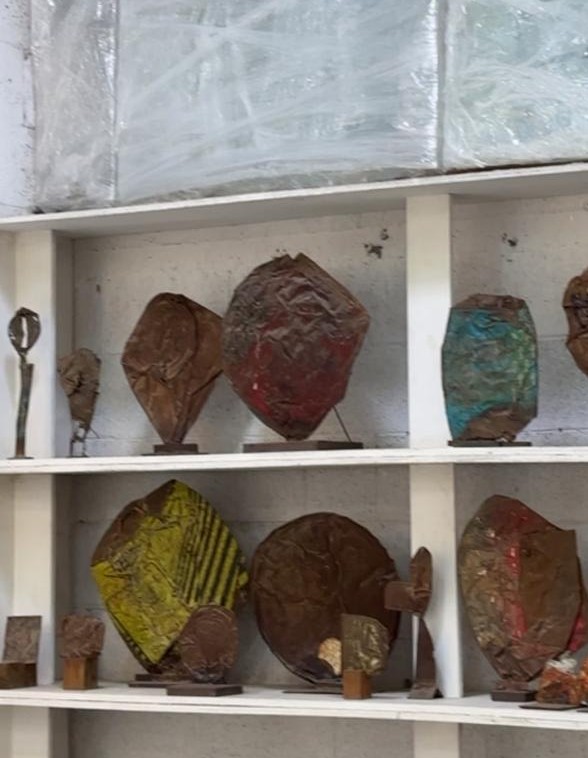
אטליה שמי הוא חלל מרתק שמשמר את רוח האמנות של יחיאל שמי. בקדמתו פסלי ברזל גדולים נטועים בנוף כאילו היה המקום עדיין סטודיו פעיל, ובמבנה הסגור, לצד פסלי מתכת גדולים וקטנים (נהדרים), פסלים מוקדמים מאבן וגם הסטודיו של שמי לציור. המודרניזם הבלתי מתפשר של שמי על החתירה לאמת החומר ביטאה אמונה בקיום אמת בכלל, נוכחת היטב. בתערוכה הנוכחית “צורות” סמדר שינדלר מציבה עבודות של מאיה דונייק, וסאן פרנקו ודרור היבש – אמנים שבלטו בתערוכות הבוגרים של בצלאל בקיץ שעבר במה שהגדירה כ”תערוכה בוחנת את המתרחש כאשר חומר אחר שאינו ברזל נפגש עם החלל; כאשר הפסל מתקרב ל”אובייקט” ומערער את גבולותיו שלו …אצל יחיאל שמי החומר הוא נקודת מוצא אתית ופיסולית ברורה, אצל שלושת האמנים הפיסול מופיע כמרחב של בחינה, של שינוי, של מסגור ושל תהליך מתמשך.”
השאלות העולות נוגעות בשורש של מה שהוא מעבר לנרטיב באמנות וזאת בתקופה בה שיח האמנות מצטמצם פעמים רבות לסיפור , למלל, לאמירה ישירה על ההווה.
החיבור למקום נותר בלתי פתור, נתון בחוסר נוחות כמו משהו שאינו מונח לגמרי במקומו, מפגש שאינו מאיר לא את העבודות העכשוויות באופן שונה מהותית מזו בה הוצגו , וודאי לא את גוף היצירה של שמי. דונייק ופרנקו מציגים עבודות וגרסאות לעבודות שהציגו בתערוכת הבוגרים בבצלאל. הפרקטיס של להציג עבודות מתערוכות בוגרים לא רק מקובל אלא גם, במקרים של עבודות טובות, מוצדק לחלוטין. כאן העבודות, אף שהן טובות לא נשכרות מהחלל.
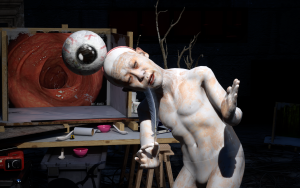
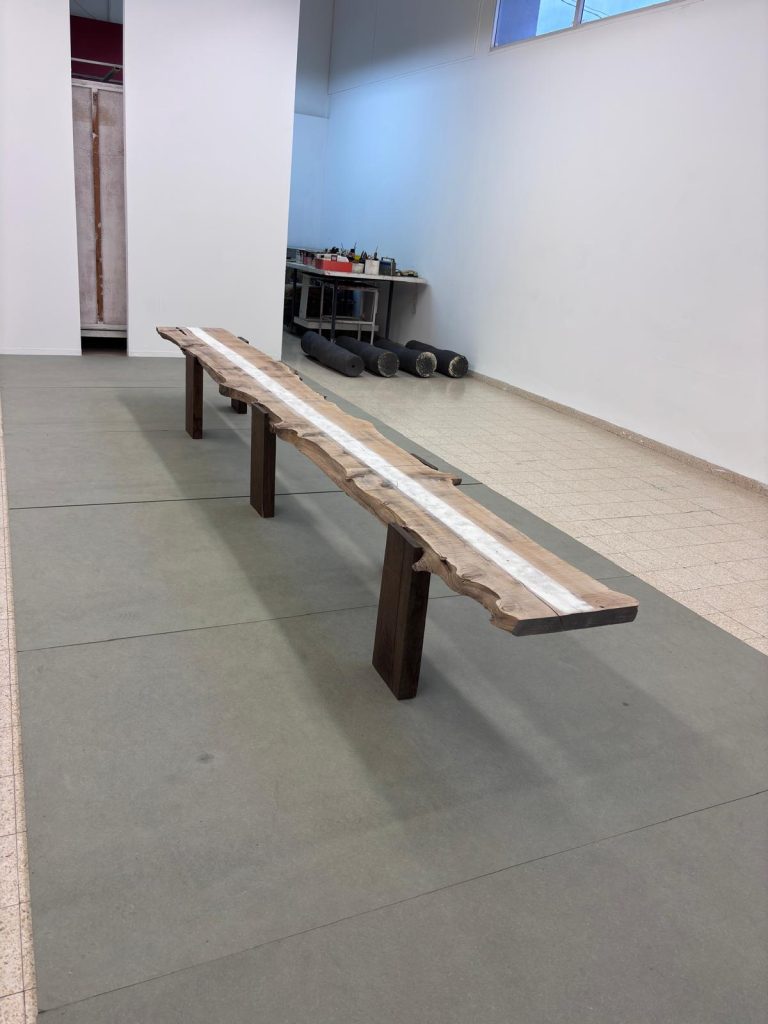
דונייק מציגה את העבודות שהציגה בחלל מוקף הזכוכית בתערוכת הבוגרים בבצלאל בירושלים בסטודיו לציור – “ספסל” עץ ארוך במרכזו קו לבן מעצמות בע”ח טחונות. גזעים עגולים בשחור שהיו מונחים בבצלאל בהמשך לספסל מונחים כאן לצידו. החיבור הצורני לחלל מעניין – את הקו הלבן ממשיך קו עץ שהוא חלק ממסגרת אחורית של ציור של שמי שניבטת מבעד לקירות הסוגרים חלל אחסון. העבודה של דונייק מעלה על הדעת את העבודות של בויס (ואת הצל הארוך שהטיל על אמנות ישראלית מדנציגר ועד גינתון) על הרליגיוזיות, המיסטיקה והקשר המסוכסך לטבע. (העבודה השלישית בקרוסלת הדימויים :Joseph Beuys, The End of the Twentieth Century, 1983-5.)
עבודה נוספת היא כמו כלי נגינה שמיתריו הוצאו חשופים מתיבת התהודה וקשורים ישירות לקלידים שהפכו למעין שנתות שמסמנות מרחב – מרחק על קיר . הקלידים/שנתות תלויים סביב פינה מוגבהת בסטודיו והמיתרים כמעט בלתי נראים נמתחים לצידו השני . הפיסול מצומצם לדקיק לחומק , היפוך מושלם לעבודות של שמי שמשקלן , הנפח שהן תופסות בעולם אומר כולו שאיפה לעוצמה .
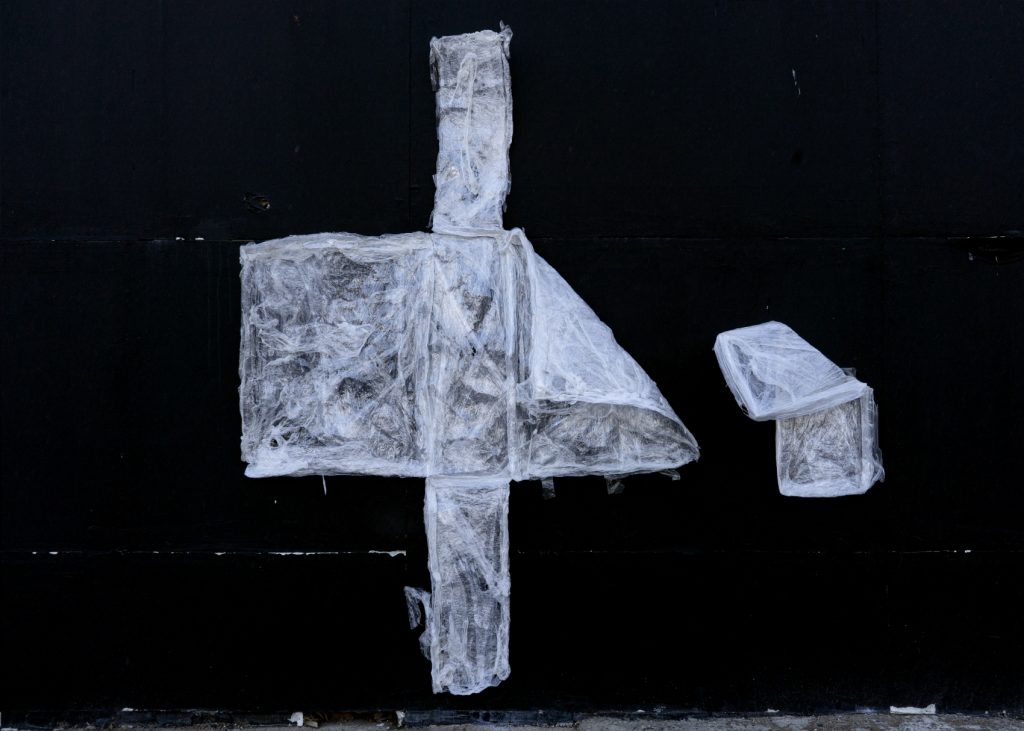
ההנגדה הזו , הפשוטה מידי חוזרת גם ביחס לעבודה של דרור היבש “מסה ריקה”, העשויה גופים שקופים למחצה מפוליאתילן ומסקנטייפ וכולה אומרת פגיעות, כאילו נגיעה בלתי זהירה תוציא את האויר , תהרוס את הצורה ותותיר ניילון משוטח וסתמי. העבודה היפה הוצגה בתערוכות אחדות שלו בשנתיים האחרונות והפכה למזוהה אתו וכאן יש תחושה מסוימת שהוורסטיליות שלה – אין חלל בו לא תתאים – נשאר כאן ברמה כזו . אפשר להכביר מילים על הקלות לעומת המשקל אך זו נשארת הנגדה כללית טובה לכל עת . צילום של יחידת “מסה ריקה” אחת, עבודה לא גדולה שתלויה על קיר בחלל מעבר, מוצלחת הרבה יותר . גופי הניילון כמו רוחות רפאים בשדה שחור מקבלים משמעות ותחושה של קור שאין לגופים השברירים המוערמים לאורך קיר ובין מרווח קיר לתקרה .
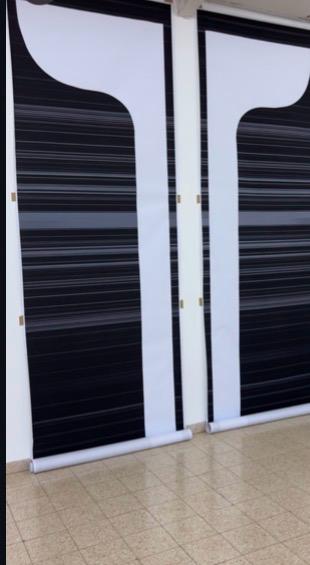
סאן פרנקו הרחיב קטע מפרויקט הבוגרים המרשים שהציג בקיץ 2025 ומקיים דיון של ממש עם האטליה. נקודת המוצא היא צילום קטן של מקלחת שטיפה מחומרים מסוכנים (ואי-אפשר להימנע מהאסוציאציות היסטוריות הזוועתיות) שמודבקת לקיר עם פיסת נייר דבק כמו הושמה שם לזיכרון או ראשיתו של לוח השראה, ממש ליד “אדם בערבה” פסל אבן הרואי של שמי משנות ה 50 – ההיפוך המושלם לדמות בקונטרפוסטו, הנלעג משהו, בצילום. ראש המקלחת הצהוב בצילום, על צורתו המשפכית חוזר כיציקה לבנה קטנה מעל קופסת מדפי עץ , שוב על שני שקפים בסטודיו לציור של שמי וכפסל גדול מצופה פורמיקה (?) הניצב מחוץ לאטליה בחצר הפיסול ממש כאילו הוא עדיין בעבודה . באופן המשועשע, הכאילו מהסס פרנקו מדבר על סכנה צד אפל של העיסוק בצורה , יוצר רפרנס עקיף אך דומה שלא תמים לצורתו של היכל הספר בירושלים ומכניס סוג של ערעור לצור האיתן – אטלייה של אמן עטור הכרה ודמות הרואית שרבות מעבודותיו המרכזיות הן אנדרטאות.
התערוכה, למרות התחושה הלא די נבדלת ולא די בדיאלוג בין העבודות המתארחות לחלל , בכל זאת מאירה את הרגע של פיסול כיום בו דומה שהוא מגשש, רחוק מההחלטיות של שמי ובני דורו.
אוצרת: סמדר שינדלר
אטליה שמי, כברי, קיבוץ כברי שעות פתיחה: ב’-ה’ ושבת: 11:00-15:00
Forms
Maia Duniec, Dror Hibsh, Sun Franko in dialogue with the sculptor Yehial Shemi
Not every interesting idea succeeds.
The Shami Atelier is a fascinating space that preserves the spirit of Yehial Shemi’s art. In its front yard large iron sculptures dot the landscape as if the place were still an active studio. Inside the enclosed building, alongside large and small metal sculptures (excellent ones), there are early stone sculptures and Shemi’s painting studio. Shemi’s uncompromising modernism, his insistence on the truth of materials, a belief in the existence of truth itself, is still a strong pressence.
In the current exhibition, Forms, curator Smadar Schindler presents works by Maia Duniec, Sun Franko, and Dror Hibsh, artists who stood out in the Bezalel Academy graduate exhibitions last summer. Schindler describes the exhibition as one that “examines what happens when a material other than iron encounters the space; when sculpture approaches the ‘object’ and destabilizes its own boundaries… With Yehial Shemi, material is a clear ethical and sculptural point of departure; with the three artists, sculpture appears as a field of inquiry, of change, of framing, and of an ongoing process.”
The questions raised touch on the very roots of what lies beyond narrative in art, at a time when art discourse is often reduced to story, text, and direct statements about the present.
The connection to the site remains unresolved, marked by discomfort, as if something is not fully in place: an encounter that does not illuminate the contemporary works in a way that is fundamentally different from their previous presentations, and certainly does not shed new light on Shemi’s body of work. Duniec and Franco present works, or versions of works, shown in their Bezalel graduate exhibitions. The practice of exhibiting works from graduate shows is not only common but, in cases of strong works, entirely justified. Here, however, although the works are good, they do not benefit from the space.
Dunietz presents the works she showed in the glass-enclosed space of the Bezalel graduate exhibition in Jerusalem, now placed in Shemi’s painting studio. A long wooden “bench” stands at the center, marked by a white line made of ground animal bones. The round black logs that extended the bench at Bezalel are placed here alongside it. The formal connection to the space is interesting: the white line is continued by a wooden line that is part of the back frame of one of Shemi’s paintings, visible through the walls enclosing a storage space.
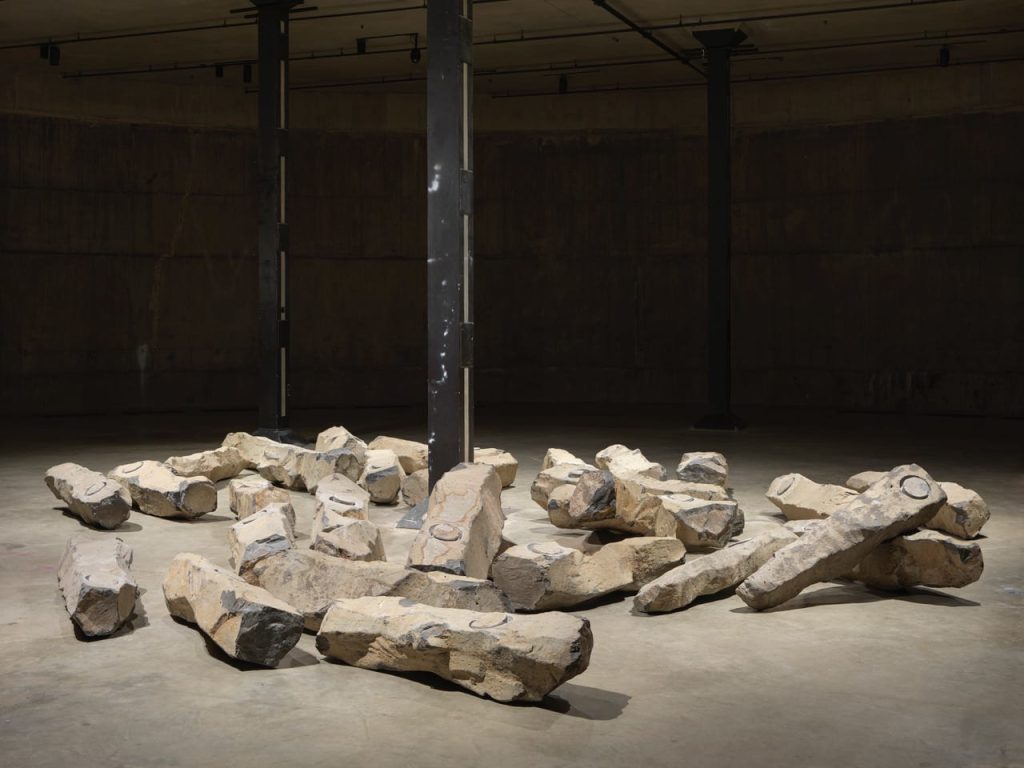
Dunietz’s work evokes the legacy of Joseph Beuys (and the long shadow he cast over Israeli art, from Danziger to Gintun), with its engagement with religiosity, mysticism, and a conflicted relationship with nature (the third image in the carousel: Joseph Beuys, The End of the Twentieth Century, 1983–85).
Another work resembles a musical instrument whose strings have been pulled out of the resonating body and tied directly to the keys, which have become a kind of notational markers delineating space and distance on the wall. The keys/markers hang around a raised corner of the studio, while the strings, almost invisible, stretch to the opposite side. Sculpture is reduced here to something thin and elusive, a perfect inversion of Shemi’s works, whose weight and volume assert a clear aspiration toward power.
This opposition, perhaps too simple, reappears in relation to Dror Hibsh’s Empty Mass, made of semi-transparent polyethylene forms and masking tape. The work speaks entirely of vulnerability, as if a careless touch might release the air, collapse the form, and leave behind flattened, banal plastic. The beautiful work has been shown in several of Hibsh’s exhibitions over the past two years and has become closely identified with him. Here, however, there is a sense that its versatility—there is hardly a space it would not suit—remains at that general level. One can elaborate at length on lightness versus weight, but this remains a broadly applicable opposition.
A photograph of a single Empty Mass unit, a small work hung on a wall in a transitional space, is far more successful. The nylon bodies, like ghosts in a black field, acquire meaning and a sense of cold absent from the fragile forms piled along the wall and in the gap between wall and ceiling.
Sun Franko expanded a segment of the impressive graduate project he presented in the summer of 2025 and establishes a genuine dialogue with the atelier. The point of departure is a small photograph of a hazardous materials emergency shower (one cannot avoid horrific historical associations), taped to the wall as if placed there as a reminder or the beginning of a mood board, right next to Man in the Arava, a heroic stone sculpture by Shami from the 1950s. The contrast is striking: the heroic figure versus the somewhat ridiculous contrapposto figure in the photograph.
The yellow showerhead in the photograph, with its funnel-like shape, reappears as a small white cast above a wooden shelving box, again on two transparencies in Shemi’s painting studio, and as a large formica-covered sculpture (?) standing outside the atelier in the sculpture garden, as if it were still a work in progress. In an amused, seemingly hesitant manner, Franco addresses the danger, the dark side of an engagement with form. He creates an indirect, though seemingly not innocent, reference to the Shrine of the Book in Jerusalem, introducing a destabilizing note into the solid rock of an atelier belonging to a highly acclaimed artist and heroic figure, many of whose major works are monuments.
Despite the sense that the exhibition does not sufficiently differentiate itself, nor fully achieve a dialogue between the visiting works and the space, it nevertheless illuminates a moment in contemporary sculpture that appears to be groping its way forward, far removed from the decisiveness of Shemi and his generation.
Curator: Smadar Schindler
Atelier Shemi , Kabri, Kibbutz Kabri
Opening hours: Mon–Thu and Sat, 11:00–15:00