בביאנלה בסולמות מינוריים התערוכה המרכזית ממשיכה מגמות שנכחו מתחילת המילניום והתוו בבירור ב־2013 בביאנלה המצוינת The Encyclopaedic Palace שאצר מסימיליאנו ג’וני (ראו ביקורת): המבט מופנה בעיקר לאמנות ויוצרים מאפריקה (והפזורה האפריקאית), אסיה ודרום אמריקה – הדרום הגלובלי – מדינות עם מורשת פוסט־קולוניאלית; יצירות רבות עשויות במדיה שנחשבו בעבר כשייכות למחוזות האומנות השימושית (במיוחד עבודות טקסטיל וחימר); מוטיב חוזר בולט הוא עיסוק ברוחניות במובנה הרחב ביותר, וכן מושם דגש על גיוון מגדרי.
בחמש הביאנלות שחלפו מאז היו דגשים שונים: החל בביאנלה של 2015, שבה Okwui Enwezor, האוצר יליד אפריקה הראשון, קבע שלפחות 25% מהמציגים יהיו לא־לבנים; דרך הביאנלה של 2022 שאצרה Cecilia Alemani, שבה 90% מהמציגות היו נשים, מרביתן מהדרום הגלובלי; ועד לביאנלה החלשה מאוד ב־2024 שאצר Adriano Pedrosa, האוצר הראשון מדרום אמריקה והראשון שהגדיר עצמו כקוויר. ניתן בה ייצוג רב לאמנים שלא זכו להכרה הולמת לדעתו (חלקם, לדעתי, אכן לא היו ראויים לה), אחוז ניכר מהם מברזיל ודרום אמריקה, ומעל מחצית המציגים כבר לא היו בחיים בעת הביאנלה.
קויו קואו (Koyo Kouoh), האוצרת הנבחרת של הביאנלה, שנפטרה בחטף שנה לפני פתיחתה, הייתה האוצרת האישה הראשונה ילידת אפריקה והראשונה שמעמדה הבינלאומי נשען על פעילותה ביבשת (ראו המאמר על מינויה ב־2024). המתווה הרעיוני המעורפל של הביאנלה פורסם לאחר מותה. בטקסט התערוכה (באנגלית) קראה לצופה לעבור “להילוך נמוך ולהקשיב לתדר של סולמות מינוריים… להרמוניות שמרפאות פצעים”. “הסולמות המינוריים”, כתבה, “מסרבים לתזמורות צבאיות בומבסטיות וקוראים לקשב לרגשות; הם מהווים איי משמעות, מערכות אקולוגיות רעננות וידידותיות”. הביאנלה ה־61, קבעה, “נטועה באמונה באמנים כפרשנים חיוניים של העולם”. התערוכה, אמרה, תהיה כמו “נגינת אנסמבל ג’אז חופשי… תערוכה חושית יותר מאשר דידקטית”.
אם לא די בכך שהמתווה היה מעורפל, הרי שהתערוכה היא תוצאה של עבודת צוות של חמישה אנשי אמנות שקואו מינתה כאוצרי משנה ועוזרים, אשר קיבלו על עצמם לאצור את התערוכה ברוחה. לדבריהם, קואו הספיקה טרם מותה, בפרק זמן של פחות משנה, לקבוע את מרבית העבודות שיוצגו ואת הנושאים המרכזיים (מספר אוצרי עבר הביעו תמיהה על כך שזמן רב לפני התערוכה ההכנות היו מתקדמות כל כך). הרצון לשמר את רוח כוונותיה ולכבד את מותה הביא לכך שלשם התערוכה הוסיפו את המילים By Koyo Kouoh — מה שנשמע מעט כמו שיתוף פעולה בין מותג אופנה למעצבת־על (למשל: adidas by Stella McCartney). יחד עם עבודה מרכזית שבה מצויר דיוקנה, נדמה שקואו הפכה למעין קדושה, והתערוכה – במידה רבה – לתערוכת זיכרון.
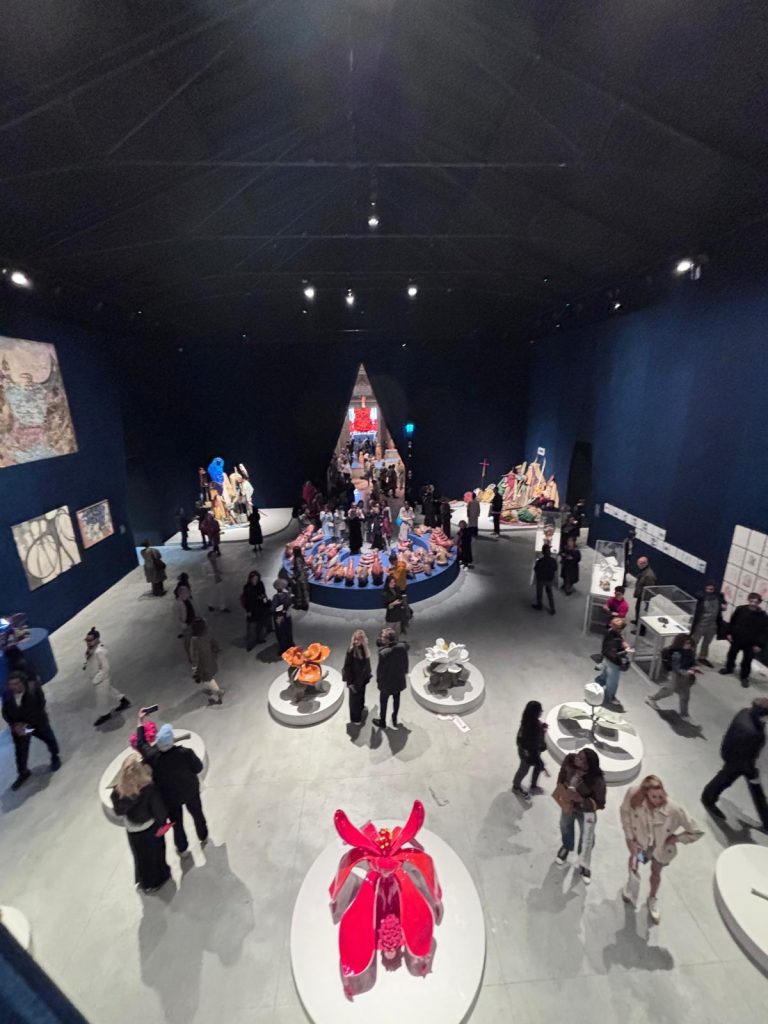
התחושה הכאוטית, והעומס של התערוכה, נובעות, יש להניח, גם מריבוי העושים במלאכה. היות שרבות מהעבודות מרתקות, התערוכה טובה, ובמיוחד אמור הדבר במחצית השנייה המוצגת בארסנלה. לאורכה שזורים טקסטים ספרותיים שמלבד ערכם הסגולי גם מאירים היטב זוויות בעבודות שלצדם.
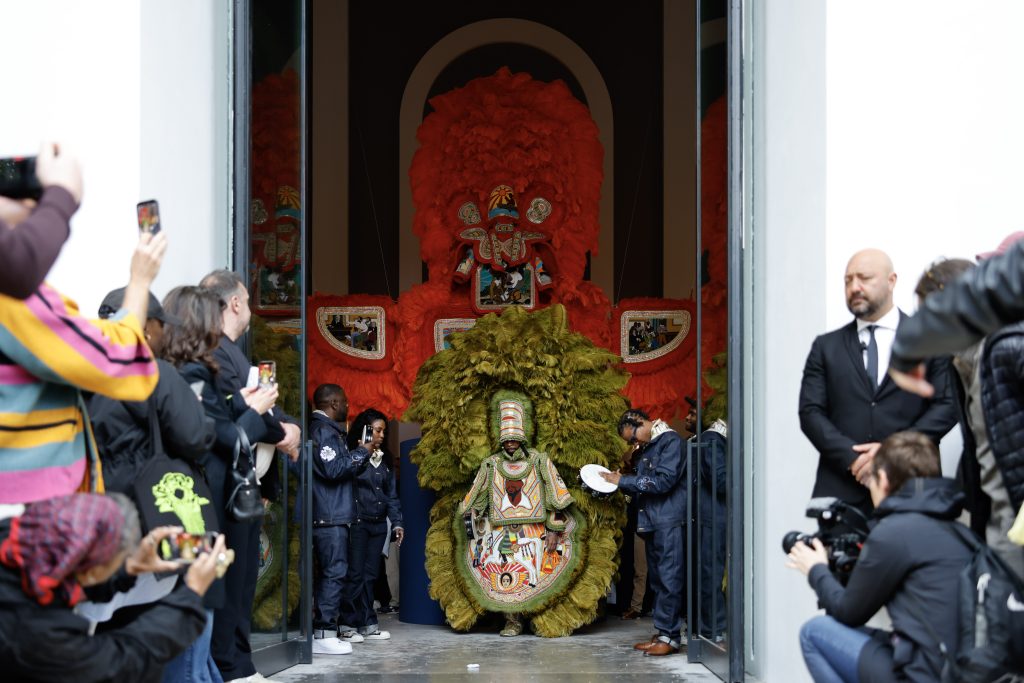
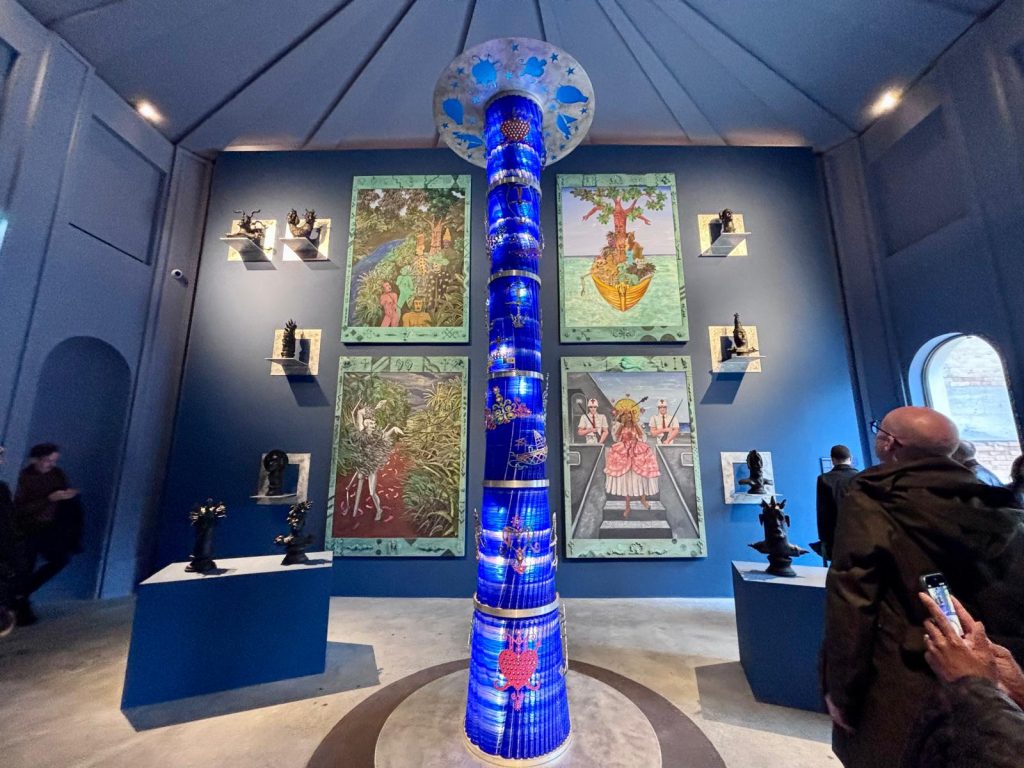
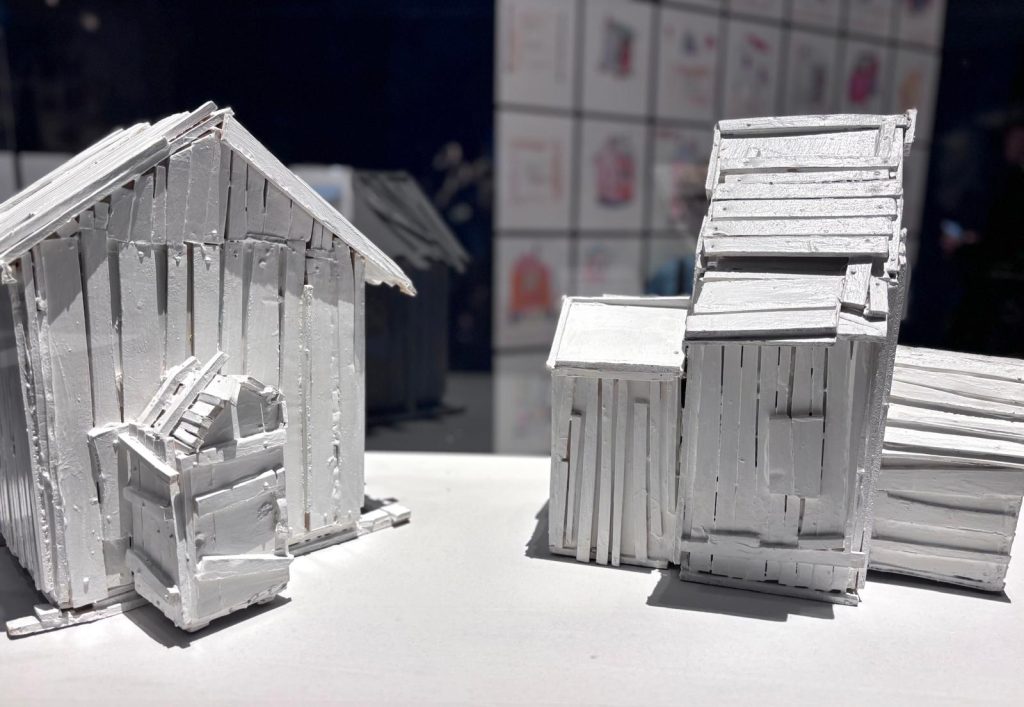
חלל התערוכה בג’רדיני נפתח בתלבושת טקסית כתומה, גדולה מאוד, עשויה חרוזים ונוצות, המוצבת על פדסטל כחול בגובה אדם. התלבושת לקוחה מטקסי Mardi Gras של הקהילה השחורה־קריאולית־אמריקאית בניו אורלינס, והיא עבודתו של Big Chief Demond Melancon, שמציג את תלבושותיו כיצירות אמנות מאז 2017 ואף ערך את טקס הפתיחה — בריקוד ותיפוף — של הביתן. באולם הכניסה מוצגים מה שקואו כינתה “מקדשים” — מחווה לאמנים Issa Samb (1945–2017) ו־ Beverly Buchanan (1940–2015) . מהאמנים החשובים בדאקר, סנגל, Samb, היה מנטור של קואו. את Buchanan, אמנית אפרו־אמריקאית שעסקה בתיאור חיי הקהילות בדרום ארצות הברית, הכירה רק לאחר מותה.
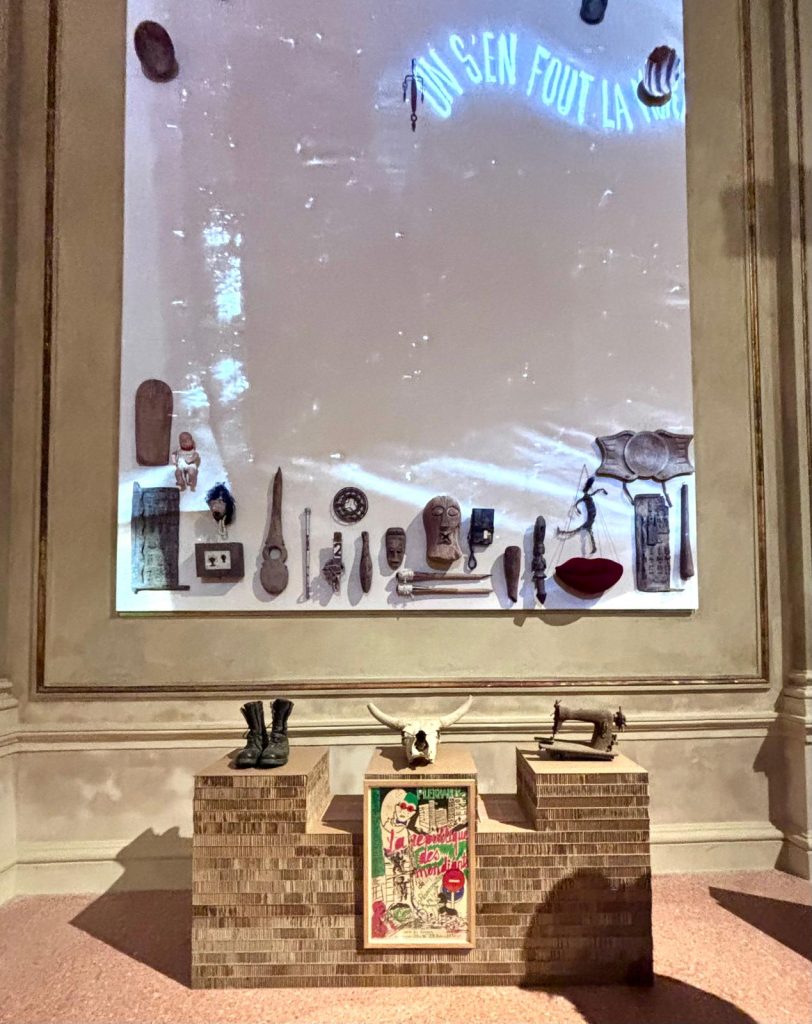
מעניין במיוחד שקואו מציגה לצד עבודות של Samb גם עבודות של Marcel Duchamp, דמות מפתח באמנות הקונספטואלית המערבית. בתערוכה מוצג Boîte-en-valise , אחד מסדרת המזוודות שבהן הכניס דושאן חפצים או יצירות אחרות. נוצרת השוואה בין הפרקטיקות האמנותיות של Samb לאלו של דושאן: כמוהו, שילב Samb כתיבה, ציור, פיסול וטכניקות נוספות, לרבות הקניית מעמד של פסלים לחפצים שמצא.זהו מהלך מחשבתי מבריק — המדגים, ומנגח, את הסטנדרטים הכפולים והמתנשאים שעדיין רווחים כלפי תרבות מאפריקה במערב. ההשוואה בין שני האמנים, שכל אחד מהם הפך את חייו ואת האמנות שיצר לכרוכים זה בזה ללא הפרד, הייתה ברורה ומפותחת הרבה יותר אילו נפרשה על פני שטח נרחב יותר מאשר פינה בתערוכה הדחוסה ממילא בג’רדיני.
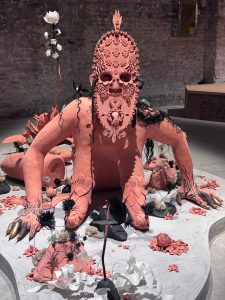
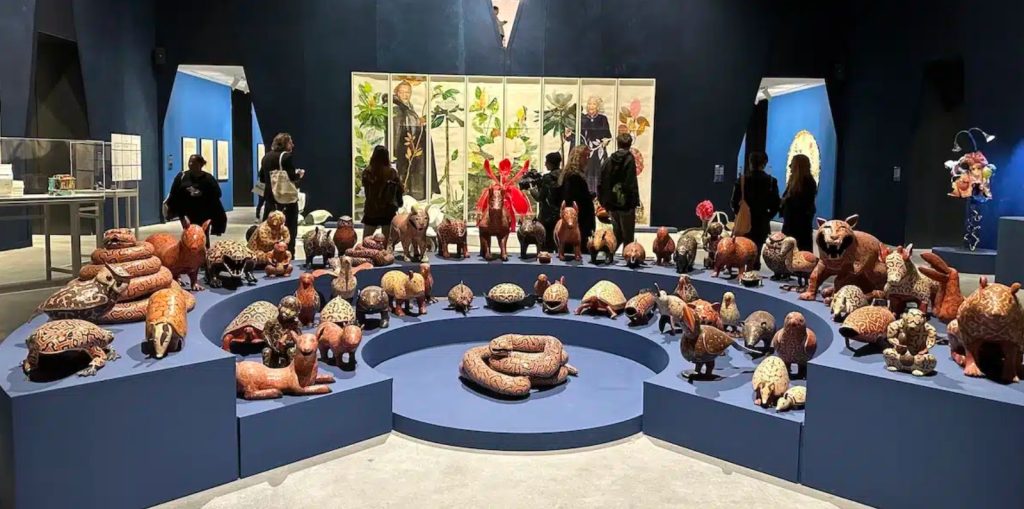
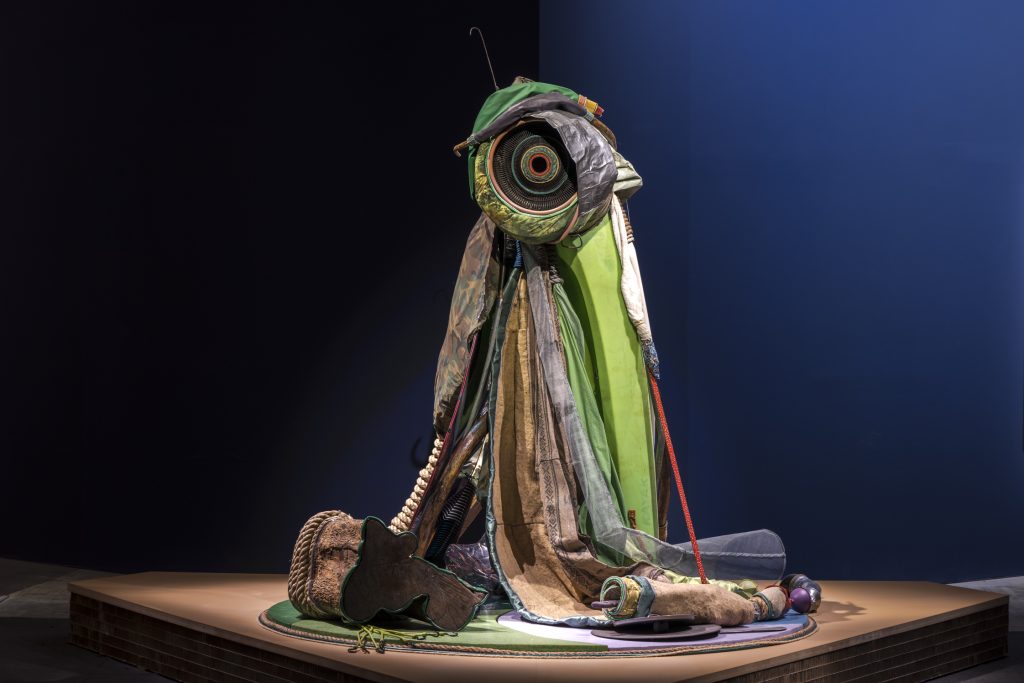
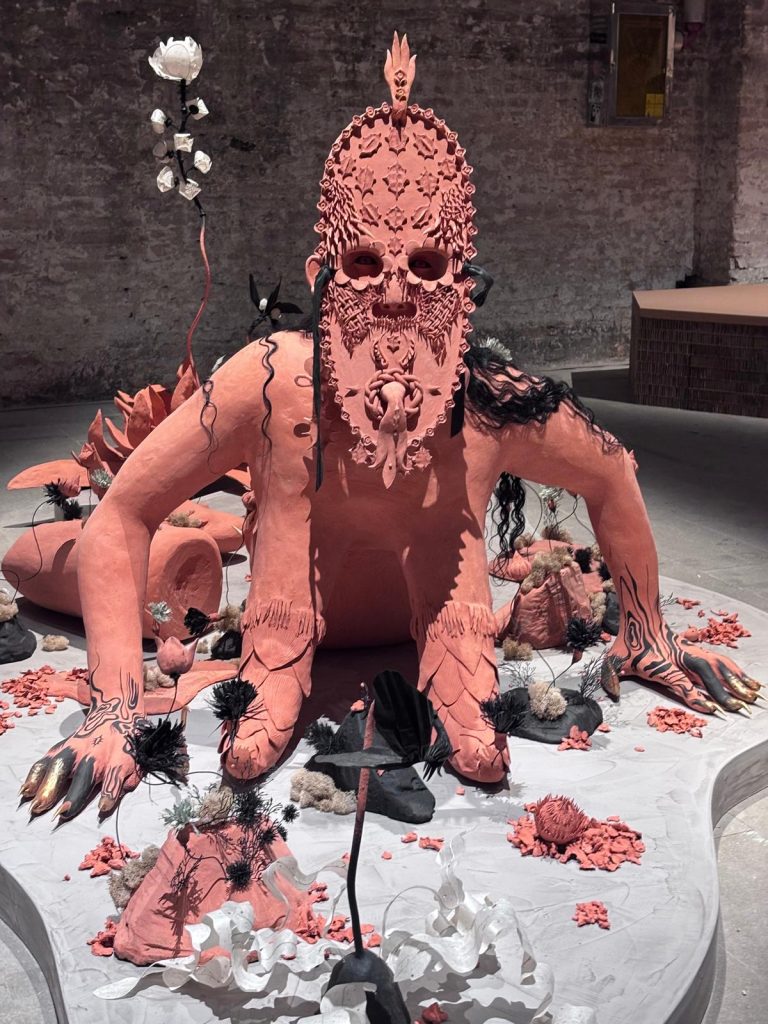
למרות הדחיסות מתבלטות עבודות טובות רבות שמצדיקות שהות ממושכת בתערוכה. אסמבלז’ים גדולים של Daniel Lind-Ramos מפוארטו ריקו, שעבודות העץ, הניילון והפלסטיק שלו מדברות על הימלטות פורטוריקנים מעבדות מרגשות – הן ישירות, מחוספסות וכמעט אנושיות; גם המיצב The Council of the Mother Spirits of the Animals של האמנית הפרואנית Celia Vásquez Yui מהפנט. זהו מערך של חיות קרמיקה האוצר בתוכו מיתולוגיה, עיסוק באקולוגיה וידע עתיק, כאשר הדגמים הגאומטריים שעל הפסלים הם מפתחות משמעות בעולם המטאפיזי. גם בתוך התערוכה ההומה הקרינו החיות, מסודרות במעין אמפיתיאטרון, עוצמה.
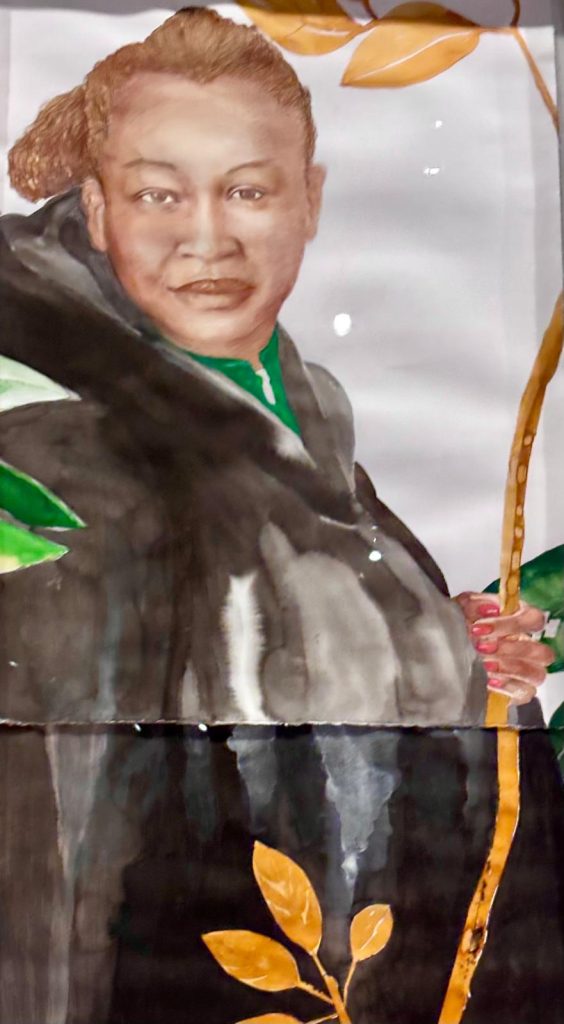
הציור של María Magdalena Campos-Pons הפך לאחד המצולמים והמזוהים בתערוכה. העבודה Anatomy of the Magnolia Tree for Koyo Kouoh and Toni Morrison (2026) היא דיוקן של שתי הנשים בגן מדומיין; שתיהן קורנות אושר ושלווה. יופיו של הציור מחפה במידת־מה על כך שמדובר בעבודה שההערצה הפסבדו־דתית הנוטפת ממנה יוצרת תחושת אי־נוחות. לצד הציור מוצבים גם שמונה פרחי מגנוליה ענקיים — אופייניים לדרום האמריקאי שעליו כותבת מוריסון — וכן עבודת סאונד שבעת ביקורי לא ניתן היה לשמוע.
הציורים של Tammy Nguyen, הווייטנאמית־אמריקאית, המשלבים טכניקות ציור עכשוויות עם מסורות וייטנאמיות, מרהיבים. המיצב של Edouard Duval-Carrié, המשלב פיסול ברונזה מתחילת המילניום, עבודת פלקסיגלס שנעשתה השנה וציורים, יוצר את אחד החללים המרשימים בחלק זה של התערוכה. הוא מתייחס להיסטוריה העכשווית של האיטי, במיוחד להפיכה הצבאית בתחילת שנות ה־90 ולגל ההגירה שבעקבותיה, תוך הנכחת המורשת התרבותית־רוחנית־דתית שהפליטים הביאו איתם — שילוב של דתות אפריקאיות, וודו ונצרות, קוסמולוגיה שלמה.
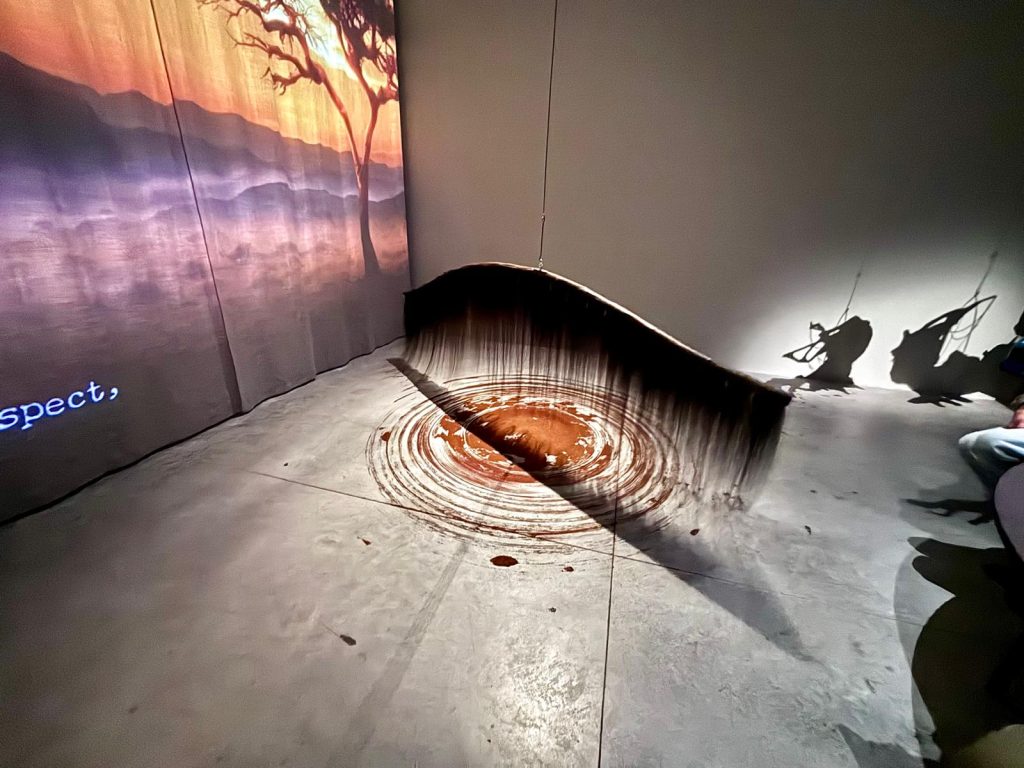
עוד עבודות מצוינות בחלק זה של התערוכה הן מיצב הווידאו והפיסול של Wangechi Mutu מקניה (היוצרת בניו יורק). העבודות נסבות על סיפור הבריאה, וזהו גם אחד ממעט מאוד עבודות הווידאו — או כל מדיה דיגיטלית אחרת — בחלק זה של התערוכה.
לצד כמות גדולה מאוד של ציור, שחלק ניכר ממנו מתמקד בייצוגי טבע דמיוני, בעיקר פרחים, שרק מקצתו טוב, יש מספר רב של עבודות טקסטיל ובמיוחד רקמות.
בחלק זה של התערוכה מוצגים כמה אמנים פלסטינים, הבולט בהם Mohammed Joha, החי במרסיי, שמציג עבודות קולאז הנראות כציורים אבסטרקטיים וכותרתם No Shelter מתיחסת לכך שצוירו כעת בצפה בטלוויזיה בתמונות עזה המופגזת .
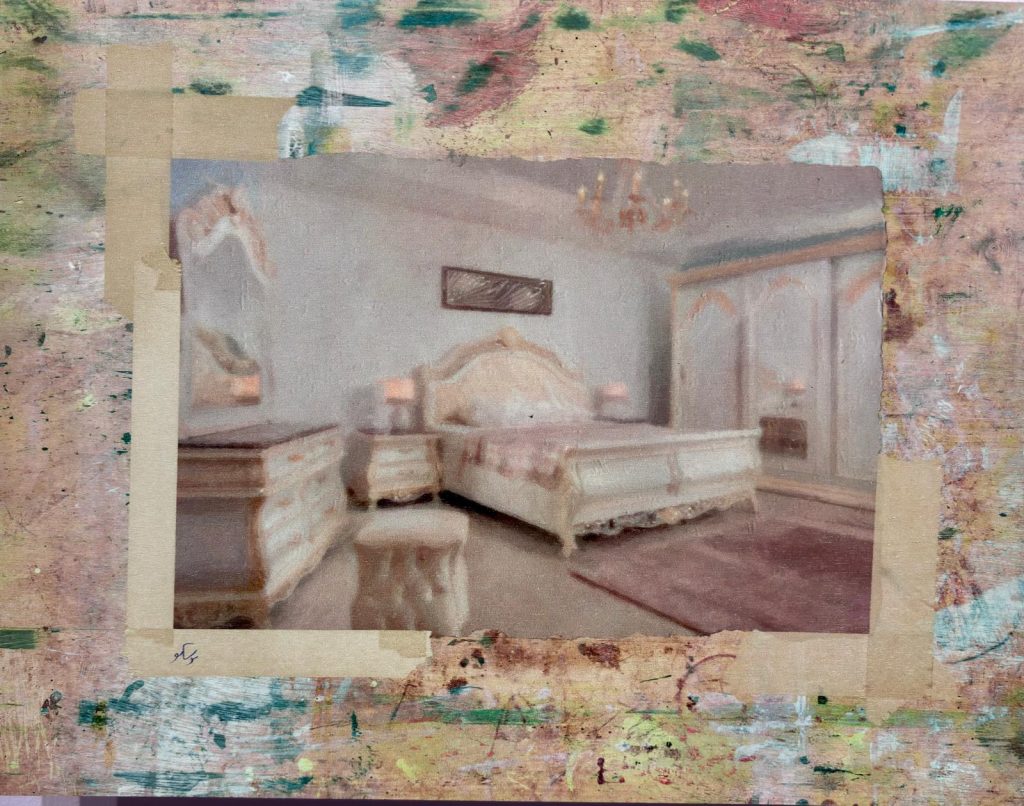
סדרה יפה של Walid Raad בשם “חדרי השינה של יאסר ערפאת” — ציורים של חדרי שינה ריקים, מספרטניים ועד מפוארים — תוך שהוא טוען שערפאת נודע בכך שלא לן באותו חדר פעמיים. כתמיד בעבודות של ראאד, סביר שאם יש גרעין כלשהו של אמת בסיפור, הרי שהוא נעטף באין־סוף בדיה, ואולי כולו בדיה. כמו רבים בתערוכה, גם הוא מציג בארסנלה. במקרה שלו מדובר בשתי עבודות טובות, אך יש מספר לא מבוטל של אמנים שהצגתם הכפולה אינה תורמת דבר.
הן בג’רדיני והן בארסנלה החלל מעוצב בקירות כחולים ובמעמדים העשויים שכבות קרטון דחוס. ההאחדה עובדת היטב. הכחול (צבע שאני עושה בו שימוש נרחב בתערוכות מאז 2014, כך שחיבתי אליו מן הידועות) מצליח להרגיע חלל כאוטי וליצור את אותו תדר קונטמפלטיבי מבוקש. המעמדים מהקרטון יפים, ולדברי האוצר Rory Tsapayi בסיור בארסנלה, הם תוכננו כך שייווצרו מחומרי האריזה שבהם הגיעו העבודות לוונציה — כלומר, כפעולה מודעת מבחינה אקולוגית , גישה שיש לקוות שתהפוך נפוצה יותר
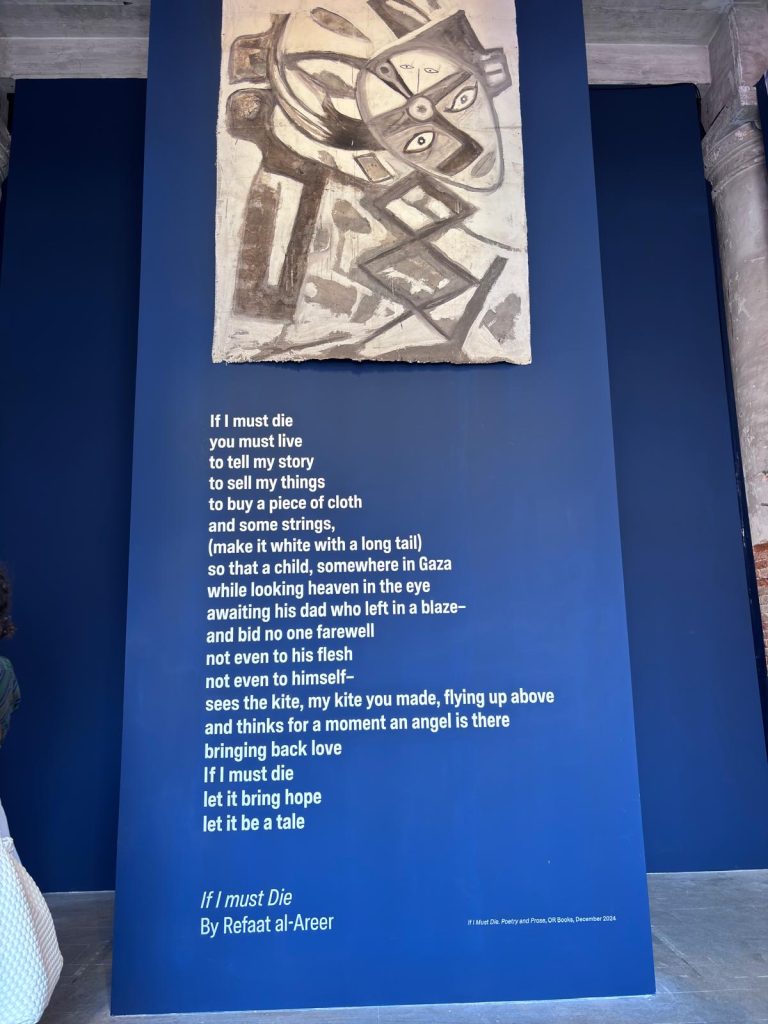
התערוכה בארסנלה נפתחת בשיר “אם אני חייב למות” של המשורר העזתי Refaat Alareer, שנהרג בדצמבר 2023 לאחר שהספיק להפוך לסמל הסבל וההתנגדות של תושבי עזה לישראל. השיר הפך לאחר מותו לאחד הביטויים השכיחים והחזקים של ההזדהות עם הפלסטינים, והוא מוכר היטב לרבים מציבור המבקרים בביאנלה. מעל השיר — בקשה להעיף עפיפון לבן לזכרו ולשמח את ילדי עזה — תלוי רישום פנים מרחפות של Issa Samb, שעבודותיו מוצגות במה שהאוצרת כינתה “מקדש לזכרו” בפתח התערוכה בג’רדיני. קשה לחשוב על הבעת תמיכה אלגנטית וחדה יותר בנושא הפלסטיני.
לאורך הקורדרייה — החלק הראשון בארסנלה, ששימש בעבר להכנת חבלים — נפרשת התערוכה עבודה אחר עבודה במה שהאוצרים מדמים ל־Procession, מונח לתהלוכה המקפל בתוכו גם משמעות טקסית ודתית. בפועל, אופן ההצגה מתיש, וההצבה הדחוסה פוגעת בחלק מהעבודות. בין האמנים שמוצגים גם בארסנלה עבודות מצוינות של Daniel Lind-Ramos, במיוחד הפסל Guardaverde (2024–25), העשוי מחומרים שנמצאו בחולות לאחר הוריקן, וכן מיצב של Walid Raad. כאן מדובר במיצב גדול המראה העתקי עבודות אמנות ערביות וטורקיות קאנוניות שנעלמו לצד כלי נשק. ראאד המציא סיפור מורכב שלפיו בתום מלחמת האזרחים בלבנון ב־1990 מכרו מיליציות לבנוניות את נשקן למיליציות סרביות, בוסניות וקרואטיות שחיפשו נשק למלחמה שאך החלה בבלקן. כשפורק הנשק התגלה שמשטחי האריזה היו מצוירים בהעתקי העבודות הקאנוניות. ההעתקים הועברו למוזיאון לאמנות בסלובניה, ושם, מספר לנו ראאד, ראה אותם לפני שנים אחדות. הסיפור כולו מומצא, ככל הנראה, אך הדיבור על יחסי אמנות ונשק — נסתר וגלוי — ועל ערך האמנות מול ערך חיי אדם, אמיתי עד כאב.
בארסנלה מוצגות מספר רב יחסית של עבודות וידאו לעומת הג’רדיני. במיצב הווידאו Between a River and a Sea (הוספת ה־a יוצרת שינוי קל אך משמעותי מהסיסמה הפרו־פלסטינית השכיחה הקוראת למחיקת ישראל), אבי מוגרבי מספר, דרך מדריך עסקים מ־1938 בלבנון, פלשתינה וסוריה ומדריך אינטרנטי מעזה מ־2023, כיצד מה שהיה בעבר מרחב אחד חדל להיות כזה עם הקמת ישראל. גם אם העבר שמוגרבי מתאר נצבע בצבעים ורודים יותר משהיה במציאות, הרי שתחושת השבר — ובעיקר ההחמצה — העולה מהשיח האנושי בין האמן ובין בן שיחו, אלי אל־אזהרי, המספרים את תולדות משפחותיהם, חזקה מאוד.
בחמישה מסכי וידאו מתבונן Éric Baudelaire, האמריקאי־צרפתי, בשוק הפרחים של Aalsmeer בהולנד — תחנה המרכזת מיליוני פרחים מרחבי העולם לפני שיווקם לשווקים קטנים יותר. בעבודה Death Passed My Way and Stuck This Flower in My Mouth (המתייחסת למחזה של זוכה פרס נובל האיטלקי Luigi Pirandello) הוא מדבר על המרחב הממוכן והממוחשב שבו פרחים, סמלי יופי אולטימטיבי, הם סחורה שיש לטפל בה ביעילות; ובכל זאת, עצם השיווק מעיד על צורך ביופי ועל ניסיון לגעת במשהו אמיתי.
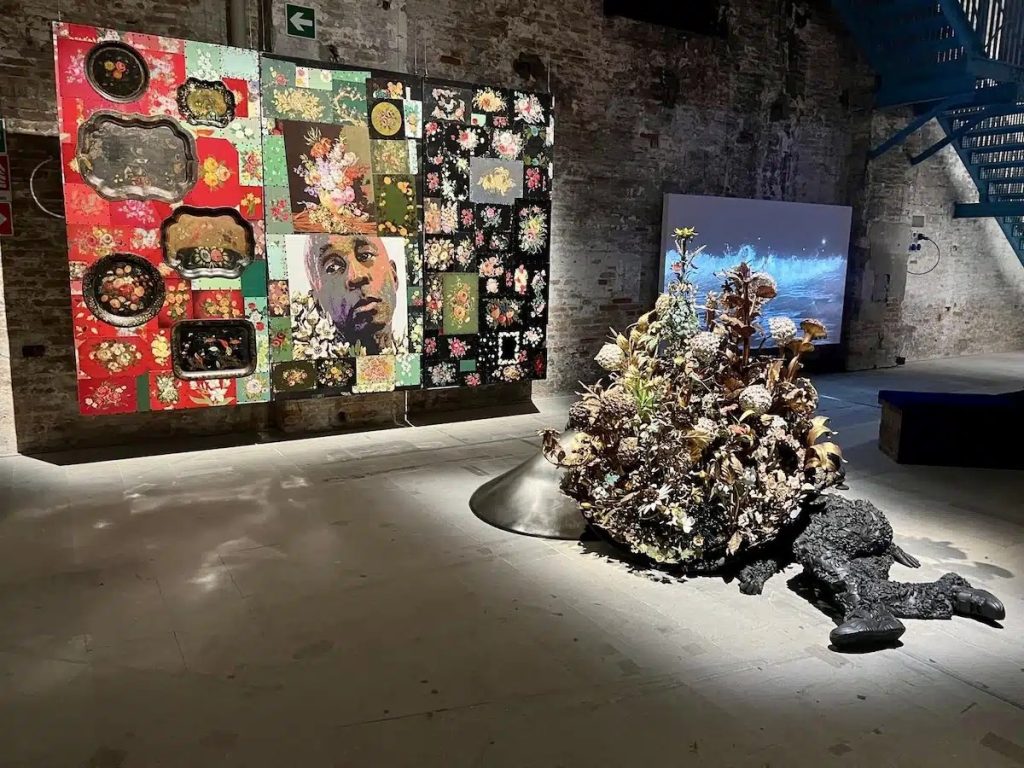
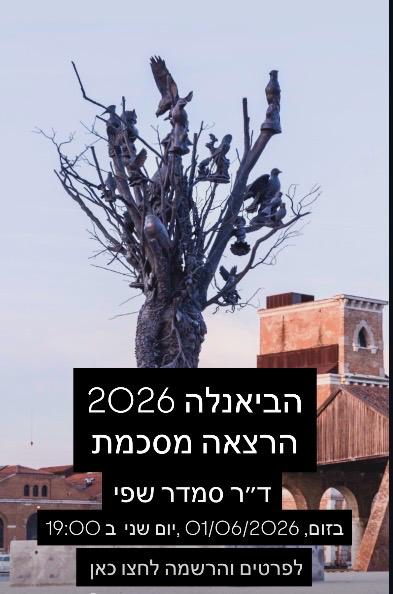
מערך פיסולי שאפתני ומרשים של Nick Cave האמריקאי הולך לאיבוד בארסנלה, וחבל. כשהבנתי זאת היה מאוחר לשוב על עקבותיי (ואשוב אליה ביולי). קייב הציב שבעה פסלים מברונזה ובמדיה מעורבת העוקבים אחר שבעת שלבי האבל כפי שהם מוגדרים בפסיכולוגיה. בעומס, הקשר בין העבודות הולך לאיבוד. גם כך, כל אחד מהם יפה ולוקח למחוזות של מטמורפוזה מיתולוגית בין אדם וצמח, אדם וקדוש, בנגיעה הסינקרטיסטית המאפיינת אותו. פסל ברונזה גדול של דמות אנושית שעץ צומח מראשה מתנשא כשומר על מזח הארסנלה, מול הביתנים ההודי והאיטלקי.
את התערוכה חתמו עבורי שתי עבודות כמעט מנוגדות: העבודה המושחזת כתער של Alfredo Jaar הצ’יליאני, החי בפורטוגל The End of the World (2023–2024), והעבודה הכאוטית והמרובדת Notebook של Laurie Anderson (שדי מדהים לחשוב שהופיעה בחצר Tel Aviv Museum of Art ב־1992, וב־2017 קיבלה את פרס וולף במוז”א).
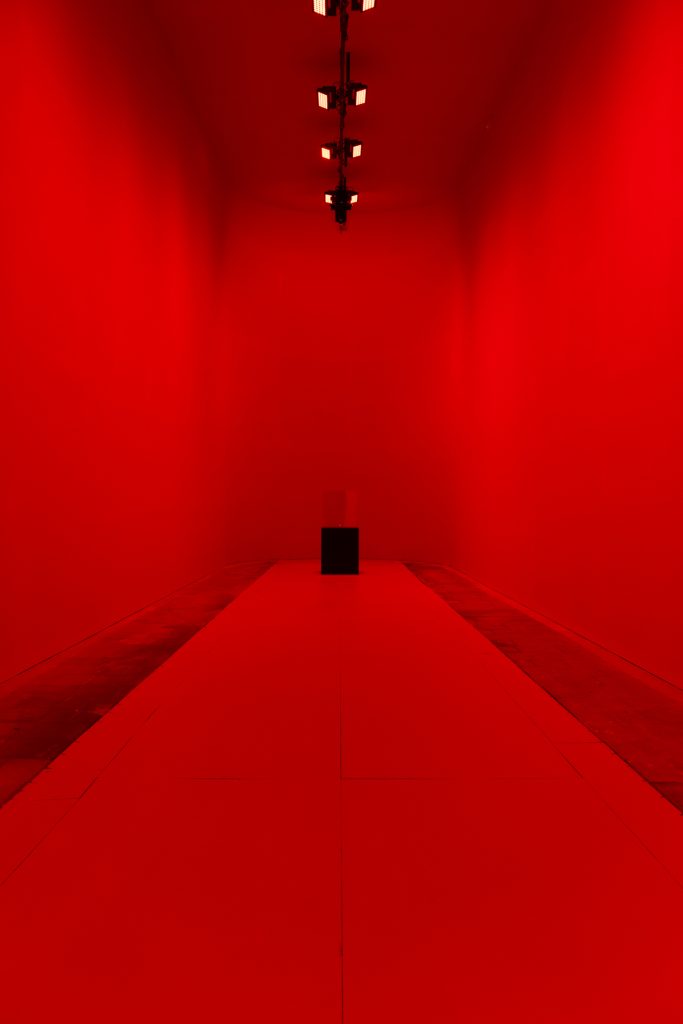
בחלל מוארך וגבוה, שטוף אור אדום, הציב Jaar קובייה בגודל 4×4 סנטימטר, עשויה שכבות ניקל, ליתיום, קובלט ומתכות נוספות החיוניות לתעשיות המתקדמות ולייצור נשק. כרייתן מסבה נזק הולך ומצטבר למערכת האקולוגית, ורובן עומדות במוקד סכסוכים פוליטיים. הן מוצגות כמוצר נחשק.
כאובייקט הערצה, כגביע הקדוש של מסע צלב של האנושות נגד עצמה — The End of the World.
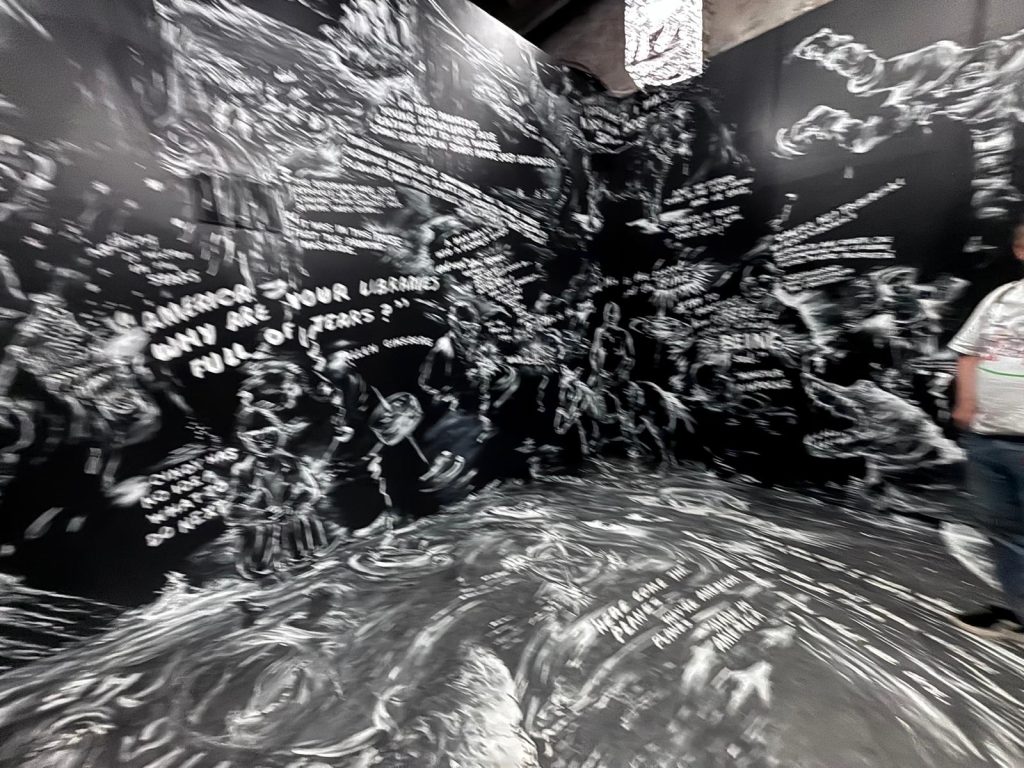
אנדרסון, בחלל קטן ודחוס, יוצרת מרחב עמוס טקסט וציור בקו שמזכיר במידה שווה קומיקס, קריקטורה של דומייה וזוועות המלחמה של גויה. קרעים של מחשבות, זיכרונות ותנועה יוצרים חלל שכמעט מעורר סחרחורת, ובתוכו מתגלה בבהירות הפחד מפירוק התרבות, מהיעלמות עולמנו בידי כוחות טוטליטריים, ימניים, גזעניים ואנטי־ליברליים.
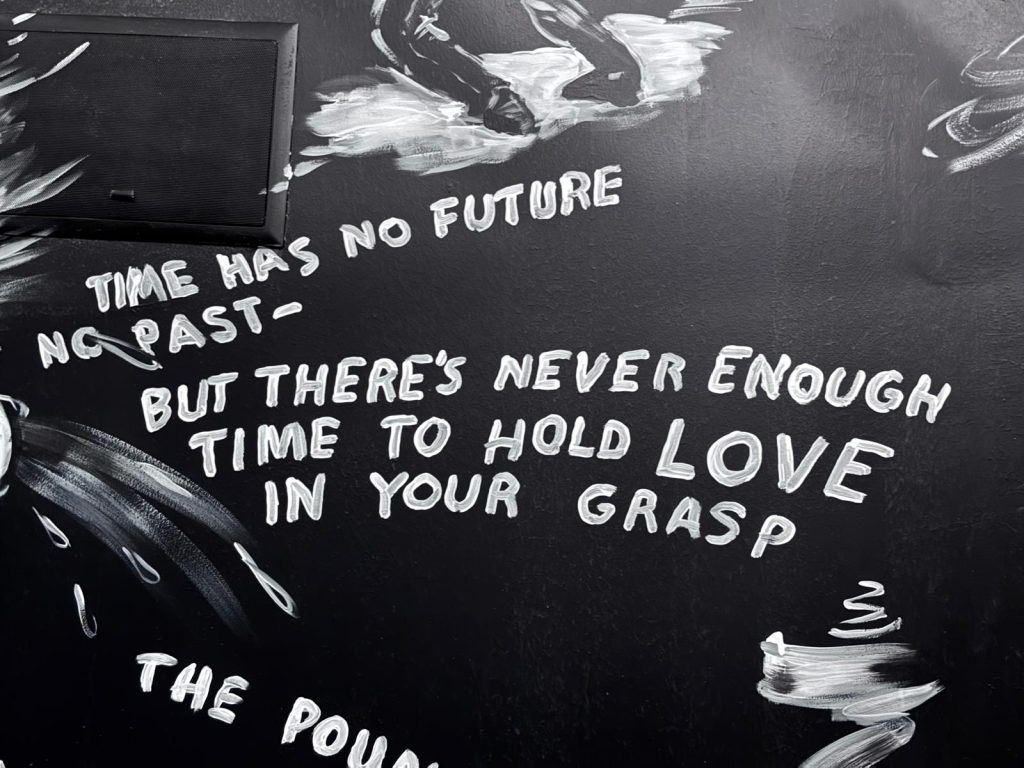
האני מאמין של הביאנלה אמנם קרא לריפוי, רוחניות והילוך נמוך אך בתום הצפייה מתברר שהיא רחוקה מכך ורוויה אבל, טראומה, וזעם. למרות חולשותיה — במיוחד תחושת הפיזור, החזרתיות המיותרת וההימנעות מבחירה שהייתה מובילה לצמצום ולהידוק — בעיות שנובעות ככל הנראה בעיקר מהיות התערוכה אוצרות משותפת ולא־היררכית — מדובר בתערוכה מרתקת ולפרקים מרגשת.
In Minor Keys
Curators : Gabe Beckhurst Feijoo, Marie Hélène Pereira and Rasha Salti (advisors); Siddhartha Mitter (editor-in-chief); and Rory Tsapayi (research assistant).
In Minor Keys, the central exhibition.
At the Venice Biennale, *In Minor Keys*, the central exhibition continues trajectories that have shaped the art world since the beginning of the millennium and were crystallized with particular clarity in the outstanding 2013 Biennale, *The Encyclopedic Palace*, curated by Massimiliano Gioni (see review). The focus remains directed primarily toward artists and practices from Africa (and the African diaspora), Asia, and South America — the Global South — regions marked by postcolonial legacies. Many works are created in mediums once relegated to the category of craft or applied art, especially textiles and ceramics; spirituality, in its broadest sense, recurs throughout; and gender diversity is given particular emphasis.
The five Biennales since have each sharpened these tendencies in different ways: beginning with the 2015 edition, in which Okwui Enwezor, the first Africa-born curator of the Biennale, stipulated that at least a quarter of participating artists would be non-white; continuing with the 2022 Biennale curated by Cecilia Alemani, where 90 percent of the exhibitors were women, most of them from the Global South; and culminating in the notably weak 2024 Biennale curated by Adriano Pedrosa, the first South American curator and the first to openly define himself as queer. Pedrosa gave extensive representation to artists he believed had been historically overlooked (some of whom, in my view, were overlooked for good reason), many from Brazil and South America, while more than half the participating artists were no longer alive when the Biennale opened.
Koyo Kouoh, the appointed curator of the Biennale, passed away suddenly a year before its opening. She was the first woman born in Africa to curate the Biennale, and the first whose international standing rested primarily on work carried out on the continent itself (see the 2024 article on her appointment). The Biennale’s diffuse conceptual framework was published only after her passing. In the exhibition text, Kouoh called upon viewers to shift “into low gear and listen to the frequency of minor keys… to harmonies that heal wounds.” “Minor keys,” she wrote, “refuse bombastic military orchestras and call for attentiveness to emotion; they constitute islands of meaning, fresh and benevolent ecosystems.” The 61st Biennale, she declared, was “rooted in the belief that artists are vital interpreters of the world.” The exhibition, she suggested, would resemble “a free jazz ensemble… more sensory than didactic.”
If the framework itself was elusive, the exhibition’s structure further complicates matters. Following Kouoh’s passing, five associate curators and assistants she had appointed undertook to realize the exhibition in her spirit. According to them, Kouoh had already determined most of the participating works and principal themes within less than a year — a pace that several former Biennale curators privately admitted astonished them. The desire to preserve her vision and honor her memory led to the addition of the words *By Koyo Kouoh* to the exhibition title — phrasing that sounds faintly like a collaboration between a luxury brand and a celebrity designer (adidas by Stella McCartney comes irresistibly to mind). Together with a major work featuring her portrait, the effect is that Kouoh herself becomes a quasi-sacred figure, and the exhibition, to a considerable extent, a memorial exhibition.
The exhibition’s somewhat chaotic atmosphere — and certainly its overwhelming density — also stems from the multiplicity of curatorial voices involved. Yet because many of the works are genuinely strong, and a substantial number deeply compelling, the exhibition succeeds overall, especially in its second half at the Arsenale. Literary texts woven throughout the display illuminate neighboring works with unusual sensitivity, beyond their own intrinsic merit.
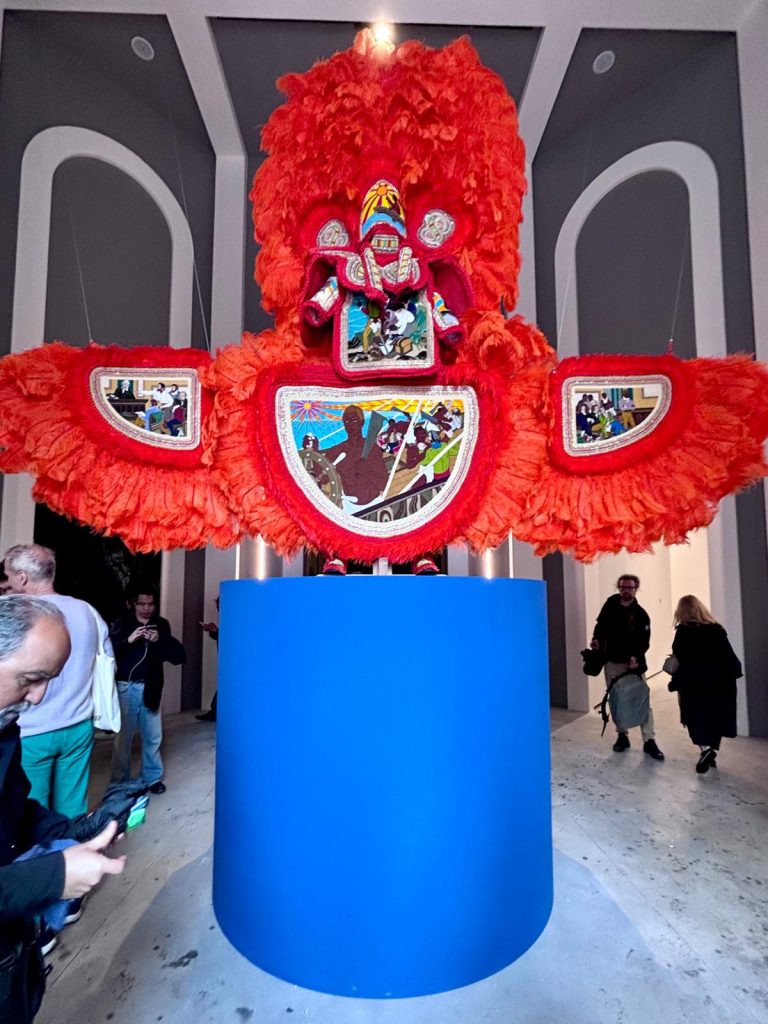
The exhibition in the Giardini della Biennale opens with an enormous orange ceremonial costume made of beads and feathers, mounted on a human-scale blue pedestal. The costume derives from the Mardi Gras traditions of New Orleans’ Black Creole community and is the work of Big Chief Demond Melancon, who has presented these elaborate garments as artworks since 2017 and also inaugurated the pavilion through drumming and dance. In the entrance hall are what Kouoh termed “shrines” — tributes to Issa Samb (1945–2017) and Beverly Buchanan (1940–2015). Samb, one of Dakar’s most important artists, was Kouoh’s mentor; Buchanan, the African American artist whose work chronicled life in the American South, Kouoh encountered only after the artist’s death.
Particularly striking is Kouoh’s decision to place Samb’s works alongside those of Marcel Duchamp, the foundational figure of Western conceptual art. Included in the exhibition is *Boîte-en-valise*, one of Duchamp’s famous suitcases containing miniature works and found objects. The juxtaposition establishes a compelling comparison between Samb’s artistic practice and Duchamp’s: like Duchamp, Samb merged writing, painting, sculpture, and found materials into an indivisible artistic language. Kouoh thus stages an exceptionally sharp curatorial argument — one that uses the example of a canonized twentieth-century Western artist to expose the lingering double standards and paternalism through which African art is still too often read in the West. The comparison between the two artists — each of whom dissolved the boundary between art and life — would have resonated even more forcefully had it occupied more than a corner of the already overcrowded Giardini exhibition.
Despite the density, numerous remarkable works reward sustained viewing. The large assemblages of Daniel Lind-Ramos, whose constructions of wood, nylon, and plastic address the histories of enslavement and migration in Puerto Rico, are deeply moving — direct, rough-edged, almost bodily in presence. Equally mesmerizing is *The Council of the Mother Spirits of the Animals* by the Peruvian artist Celia Vásquez Yui: a constellation of ceramic animals containing within them mythology, ecological consciousness, and ancestral knowledge. The geometric patterns covering the sculptures function as keys to metaphysical systems of meaning. Even amid the exhibition’s crowds, the animals — arranged like a small amphitheater — radiated authority.
The painting by María Magdalena Campos-Pons has already become one of the exhibition’s most photographed and recognizable images. *Anatomy of the Magnolia Tree for Koyo Kouoh and Toni Morrison* (2026) depicts the two women in an imagined garden, bathed in serenity and mutual affection. The painting’s beauty partly offsets the discomfort produced by the almost devotional reverence it projects. Beside it stand eight monumental magnolia blossoms — emblematic of the American South so central to Toni Morrison’s writing — alongside a sound work that, during my visit, was unfortunately inaudible.
The paintings of the Vietnamese American artist Tammy Nguyen, which combine contemporary painterly techniques with Vietnamese visual traditions, are dazzling. Likewise, the installation by Edouard Duval-Carrié — combining bronze sculptures from the early 2000s, newly produced plexiglass works, and paintings — creates one of the most visually impressive spaces in this section of the exhibition. The work addresses Haiti’s contemporary political history, especially the military coup of the early 1990s and the migration that followed, while foregrounding the spiritual and cultural cosmologies refugees carried with them: a syncretic world of African religions, Vodou, and Christianity.
Among the strongest works in this section is also the sculptural and video installation by the Kenyan artist Wangechi Mutu, who works in New York. The installation revolves around narratives of creation and is one of the very few digital or video-based works in this part of the exhibition.
Alongside a vast quantity of painting — much of it devoted to imagined landscapes and floral imagery, only part of it successful — there is also a substantial presence of textile works, especially embroidery.
Several Palestinian artists appear in this section, most notably Mohammed Joha, who lives in Marseille and presents collage works resembling abstract paintings. Their title, *No Shelter*, refers to the fact that they were created while watching televised images of Gaza under bombardment.
A particularly elegant series by Walid Raad, titled *Yasser Arafat’s Bedrooms*, depicts empty bedrooms ranging from austere to opulent, accompanied by the claim that Arafat never slept in the same room twice. As with much of Raad’s work, if there is a kernel of truth in the story, it is buried beneath endless layers of invention — or perhaps wholly fabricated. Like many artists in the exhibition, Raad also appears at the Arsenale. In his case the duplication produces two strong presentations, though for several others the repetition adds little.
Both the Giardini and the Arsenale di Venezia employ a unified exhibition design of blue walls and pedestals constructed from compressed layers of cardboard. The coherence works surprisingly well. The blue — a color I have used extensively in exhibitions since 2014, so my fondness for it is hardly a secret — succeeds in calming the surrounding chaos and producing precisely the contemplative frequency the exhibition seeks. According to curator Rory Tsapayi during a tour of the Arsenale, the cardboard structures were designed to be fabricated from the packing materials in which the artworks arrived in Venice — an ecologically conscious gesture one hopes will become increasingly common.
The Arsenale exhibition opens with “If I Must Die” by the Gazan poet Refaat Alareer, who was killed in December 2023 after becoming a symbol of Palestinian suffering and resistance in Gaza. Following his death, the poem became one of the most widely circulated and emotionally charged expressions of solidarity with Palestinians, instantly recognizable to many Biennale visitors. Above the poem — with its plea to fly a white kite in his memory and bring joy to Gaza’s children — hangs a drawing of floating faces by Issa Samb, whose work also appears in the “shrine” at the entrance to the Giardini exhibition. It is difficult to imagine a more elegant or incisive gesture of solidarity with the Palestinian cause.
Throughout the Corderie — the first section of the Arsenale, historically used for rope-making — the exhibition unfolds as what the curators describe as a “procession,” a term carrying both ritualistic and religious associations. In practice, however, the display becomes exhausting, and the density of the installation weakens several works.
Among the artists who also appear here are Daniel Lind-Ramos, represented by the superb *Guardaverde* (2024–25), composed of materials found in the sand after a hurricane, and another major installation by Walid Raad. Here Raad presents reproductions of canonical Arab and Turkish artworks displayed alongside weapons. He invents an elaborate narrative in which Lebanese militias, at the end of the Lebanese Civil War in 1990, sold weapons to Serbian, Bosnian, and Croatian militias preparing for the Balkan wars. When the weapons were dismantled, the shipping crates were discovered to be painted with reproductions of canonical artworks. These reproductions, Raad tells us, eventually entered a Slovenian museum where he encountered them years later. The story is almost certainly fictional, yet the meditation on the hidden and overt relationships between art and weaponry — and on the value of art in relation to human life — feels painfully true.
Compared to the Giardini, the Arsenale includes considerably more video works. In *Between a River and a Sea* — the insertion of the article “a” producing a subtle but meaningful deviation from the familiar pro-Palestinian slogan calling for Israel’s erasure — Avi Mograbi reflects, through a 1938 business guide to Lebanon, Palestine, and Syria alongside an online guide from Gaza in 2023, on how what was once experienced as a continuous geographic and cultural region ceased to function as such after the establishment of Israel. Even if Mograbi’s evocation of the past is tinged with nostalgia, the sense of rupture — and especially of historical loss — emerging from the exchange between the artist and his interlocutor, Eli al-Azhari, is deeply affecting.
Across five video screens, the French American artist Éric Baudelaire observes the flower market in Aalsmeer, the Netherlands, where millions of flowers from around the world pass before being redistributed globally. In *Death Passed My Way and Stuck This Flower in My Mouth* — a title referencing a play by Luigi Pirandello — Baudelaire examines a mechanized and computerized environment in which flowers, symbols of ultimate beauty, become commodities managed with logistical efficiency. Yet the very existence of this industry also testifies to humanity’s persistent longing for beauty and for contact with something authentic.
An ambitious sculptural installation by the American artist Nick Cave is unfortunately somewhat swallowed by the scale of the Arsenale. By the time I fully realized this, it was already too late to retrace my steps (I will return in July). Cave presents seven bronze and mixed-media sculptures corresponding to the seven stages of grief. Amid the surrounding visual overload, the relationship between the works becomes difficult to grasp. Still, each sculpture is individually powerful, leading into territories of mythological metamorphosis between human and plant, human and saint, with the syncretic sensibility so characteristic of Cave’s work. A monumental bronze figure with a tree emerging from its head stands guard over the Arsenale pier opposite the Indian and Italian pavilions.
For me, the exhibition concluded with two almost diametrically opposed works: the razor-sharp *The End of the World* (2023–2024) by the Chilean artist Alfredo Jaar, who lives in Portugal, and the layered, chaotic *Notebook* by Laurie Anderson — and it remains astonishing to think that Anderson performed in the courtyard of the Tel Aviv Museum of Art in 1992 and received the Wolf Prize there in 2017.
In a tall, elongated space flooded with red light, Jaar placed a tiny 4 × 4 centimeter cube composed of layers of nickel, lithium, cobalt, and other metals essential to advanced technologies and weapons manufacturing. Their extraction causes escalating ecological devastation, and many lie at the center of geopolitical conflict. Jaar presents them as an object of desire, a fetishized commodity, a holy grail in humanity’s crusade against itself: *The End of the World*.
In contrast, Anderson fills a cramped room with an overwhelming accumulation of text and line drawing that recalls comics, silent-film caricature, and Francisco Goya’s visions of war in equal measure. Fragments of thought, memory, and movement generate a space bordering on vertigo, within which emerges with startling clarity a fear of cultural collapse — of our world dissolving under totalitarian, racist, right-wing, and anti-liberal forces.
The Biennale’s curatorial credo may have invoked healing, spirituality, and slowness, yet by the end it becomes evident that the exhibition is saturated instead with grief, trauma, and rage. Despite its weaknesses — especially its diffuseness, unnecessary repetition, and reluctance to edit or reduce — shortcomings that stem largely from its collective, non-hierarchical curatorial structure — the result is nevertheless an engaging, intellectually rich, and at times profoundly moving exhibition.