רוע צרוף – סתמי, אדיש, מזוקק. בן אלון וליאם אמיל שמבון מתבוננים ברגש הזה – המפחיד והמצמית בתערוכה “נבוכים” המתייחסת למקרה המחריד של רצח נהג המונית דרק רוט. רוט נרצח ב 1994 בידי ארבל אלוני ומשה בן-איבגי, בני 14 מהרצליה שעשו זאת מתאוות רצח (לא הייתה בינם לרוט הכרות מוקדמת).
המיצב המשותף של אלון ושמבון יכול להיקרא כגישוש אחר הבנת המבנה הנפשי שאפשר את הרצח. שם התערוכה מתקשר ל”מורה נבוכים” חיבורו של הרמב”ם מהמאה 12 בו ניסה לשרטט סיבות רציונליות למצוות דתיות, להסביר את מה שאינו ניתן להסבר. אמנם יש במיצב מידה מסוימת של בוסריות (שני היוצרים הם אמנים צעירים בוגרי השנים האחרונות) אבל הוא מרשים.
אלון ושמבון שינו את הגלריה על ידי בניית קיר גבס החוצה את מרכז החלל וקירות נוספים היוצרים חדרים פתוחים. את החלונות והפתחים אטמו במשטחי דיקט המדגישים את הסגירה ומדגישים את התא הסגור, המעיק והאלים שבו מצוי/הצופה. החלל אינו מדמה לגמרי דירה אך מסמן חללים: חדר שינה, סלון, מקלחת וחלל כניסה. המערך המוכר הופך לאלביתי, לטורד כשהשימוש שנעשה בדימויים שמרמזים בקולנוע (וגם בספרות) על רוע עיוות ותוקפנות שזור לכל אורכו.
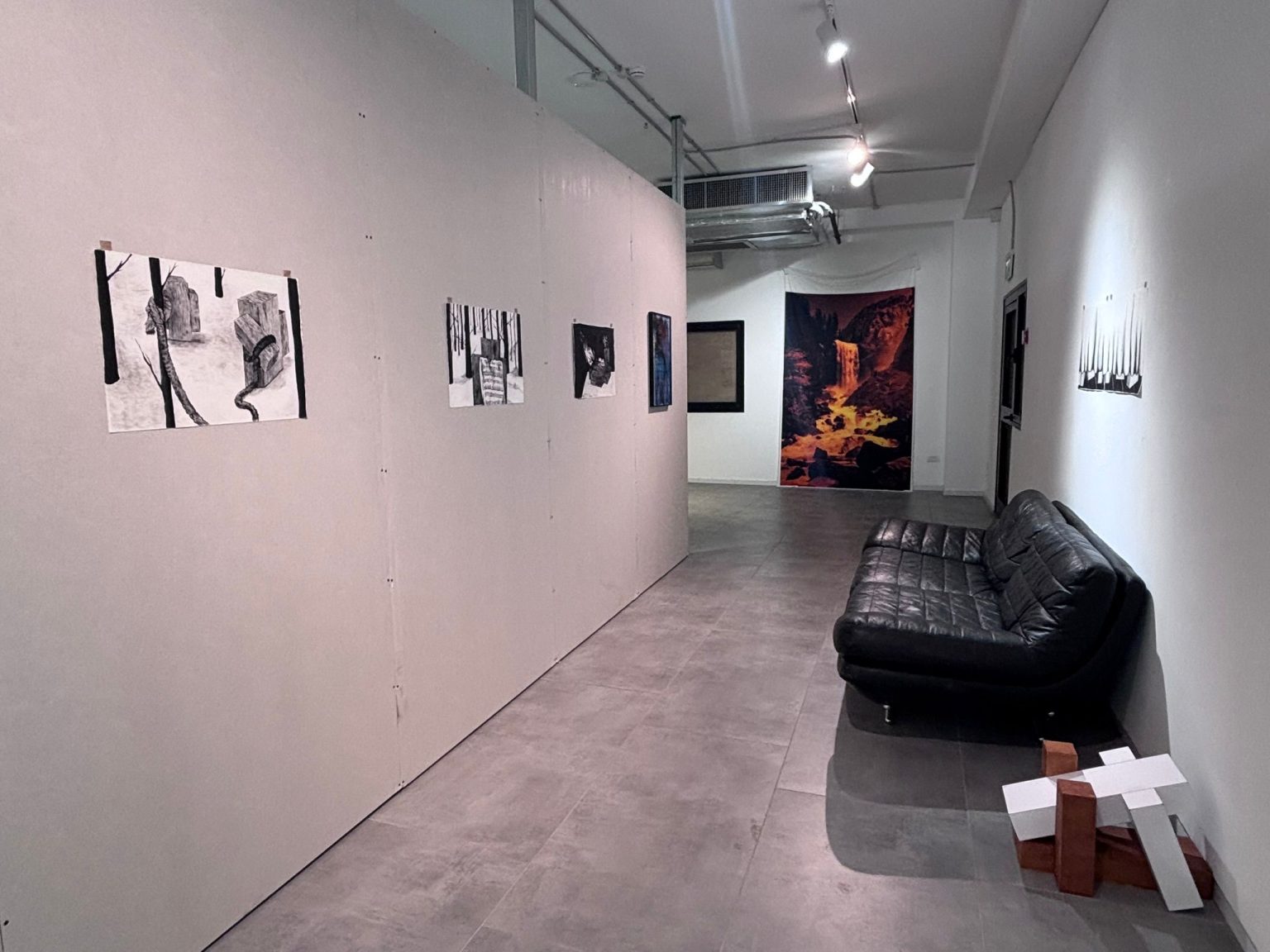
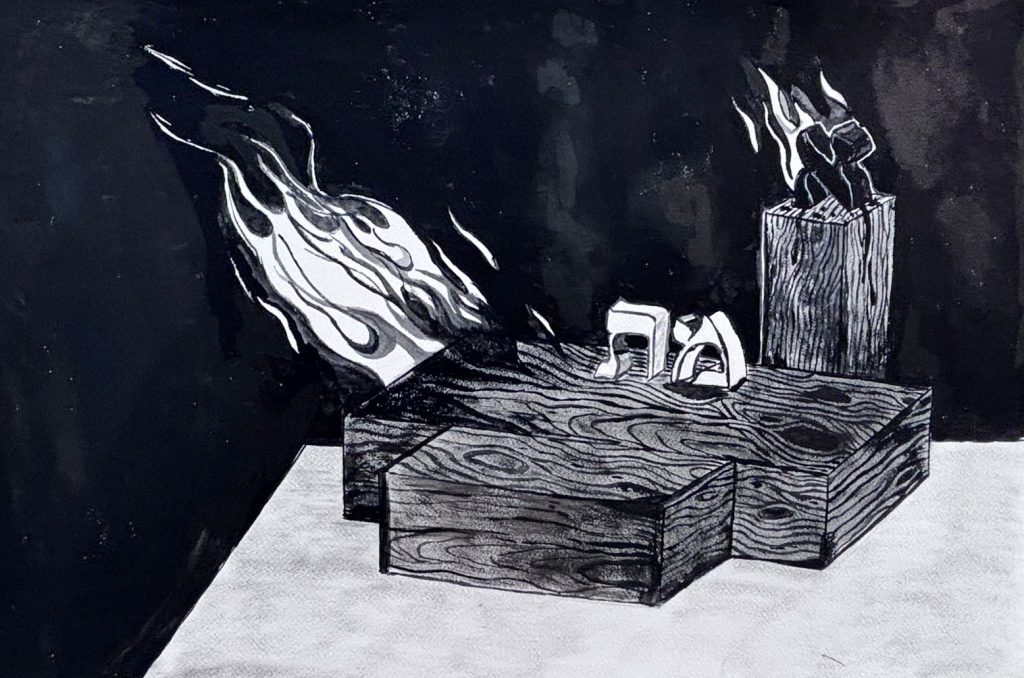
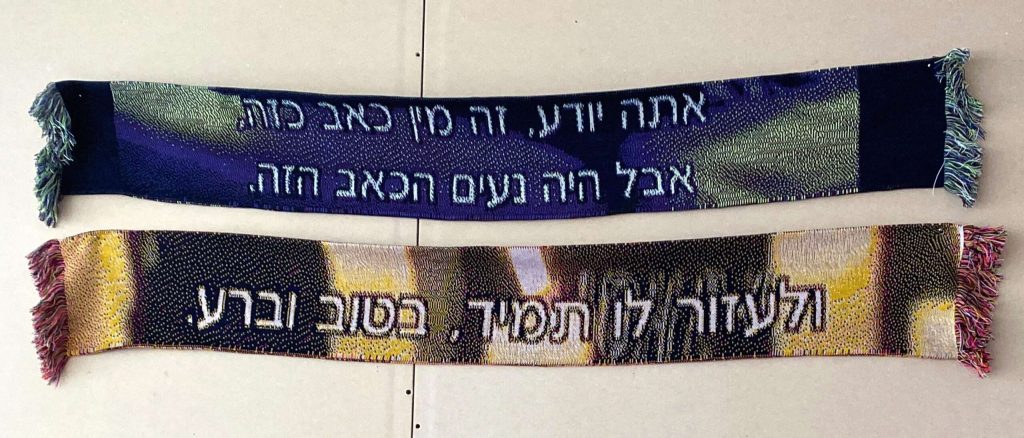
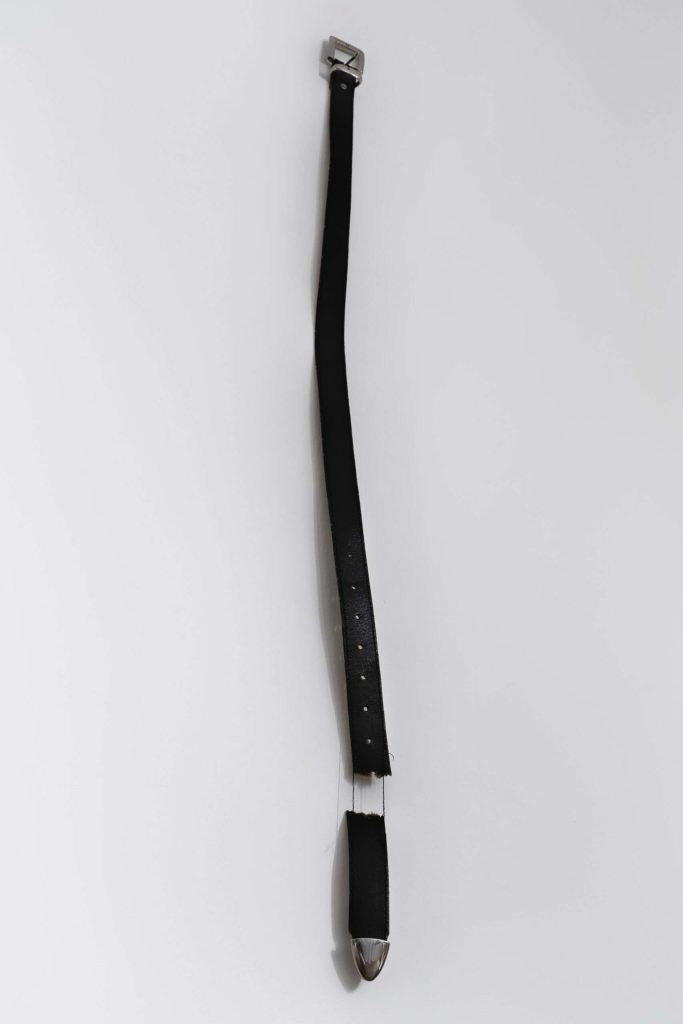
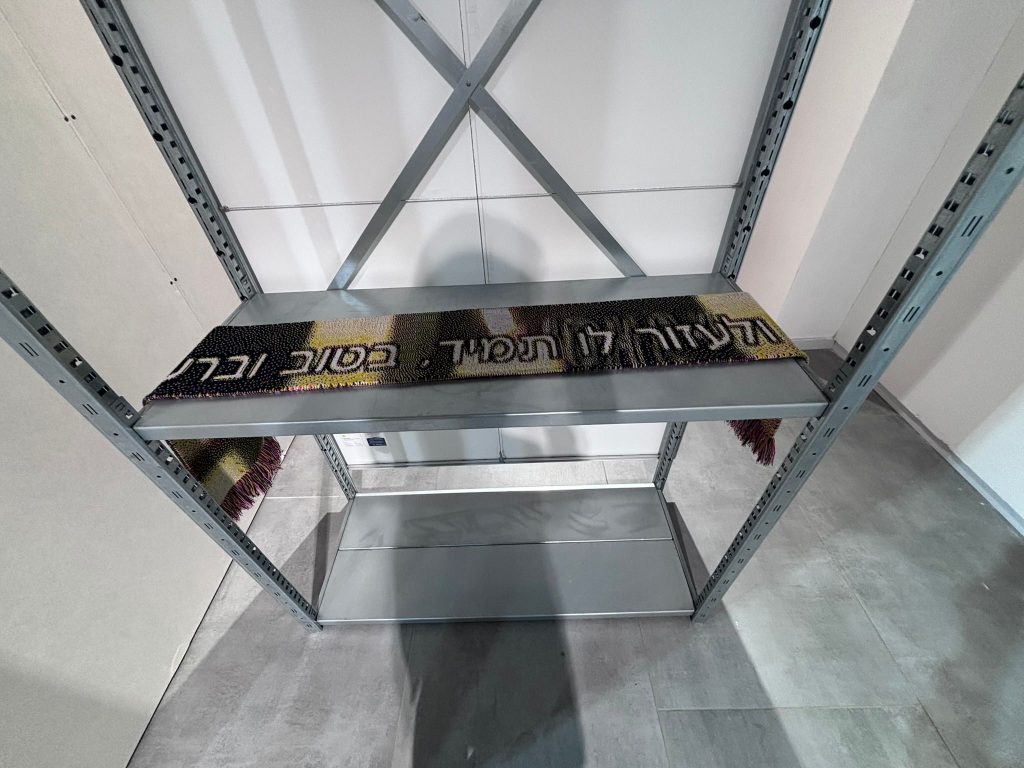
האלימות והמוות נוכחים בכל פינה בדירה הקונצפטואלית שחלקים בקירות הגבס המסמנים אותה נותרו שלדי קיר בלבד, כבבית רעוע. צילום חגורה מוגדלת לממדי ענק כמעט ממחיש אלימות בחיק המשפחה, המופנית בדרך כלל לנשים ולילדים. בעבודות רישום (שמזכירות את Raymond Pettibon וגם את רועי רוזן) נופים קודרים ועל קברים, כמו הסבר מיותר, או אישור מופיעה המילה “מת”. צעיפים, כשל אוהדי קבוצות כדור רגל, חבורות שחלקן אלימות במיוחד, תלויים, או פרוסים על מדפים. בטקסטים שכתובים עליהם כאילו היו שמות מועדוני אוהדים מופיעות המילים “כאב” ו “טוב” ו”רע” עמודי התווך הרעיונים בהם דנה התערוכה.
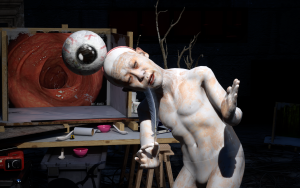
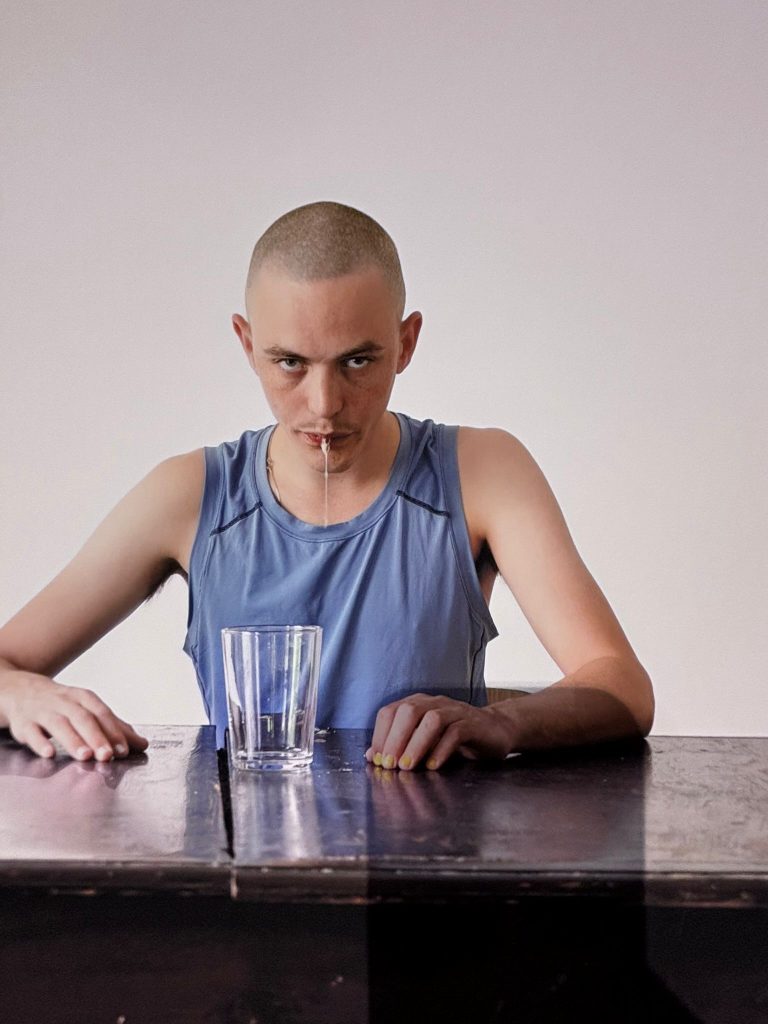
שני דיוקנאות דיכוטומיים – דיוקן קורבן ודיוקן תוקפן – כמו ממסגרים רעיונית את התערוכה: בכניסה צילום ילדה חייכנית שמהווה מרכז של שעון, מסוג האובייקטים שקונים בדוכנים בקניונים ואפשר להכניס בהם תמונות שונות. מה שאמור להיות חפץ נוי חביב מקבל על הקיר הארוך והריק משמעות עוכרת שלווה – מה היחס בין הזמן החולף לילדה? ההכרה באלימות של חרור – שיפוד הדיוקן הולכת ומתחדדת עד שהוא הופך לכמעט צליבה סימבולית. (משיחה עם אלון התברר שמדובר בדיוקן אחותו ואת השעון רכש עבורה כמתנת יום הולדת לפני כעשור כשהיה נער). הדיוקן השני, דיוקן של בן אלון מעלה על הדעת ערפד, יצור מיתי ששותה את דם קורבנותיו ומתואר לא פעם כשדם נוזל מקצה שפתיו: הוא רכון מעל שולחן שעליו כוס מים ומפיו נוזל זרזיף דק ודוחה, ציפורניו משוחות לק צהוב. – הדיוקן, עם המבט האטום והמרושע והכוס ביד מתכתב, אולי במודע ואולי לא, עם דימוי מ”התפוז המכני”, סרטו של סטנלי קובריק מ 1971. קובריק משתמש באלימות נערים לדבר על התפרקות המארג החברתי, מערכות שליטה והנאה מאלימות לשמה. האסוציאציה לאלוני ובן – איבגי מידית, כך גם לזוועות שהתחוללו בטבח 7 באוקטובר בעוטף עזה ולדיווחים העכשוויים על הזוועות שמעוללים מתנחלים (“נערי גבעות”) בשטחים הכבושים.
בתערוכה גם דיוקנאות מרומזים – על חלון תלויים מכנסי ג’ינס ומסמנים לגוף שאיננו ושני שעונים נראים כאילו צוירו על שמשה מכוסה אדים. השעונים נראים כמחווה לעבודה “Untitled” (Perfect Lovers) של פליקס גונזלס ( גרסה ראשונה מ 1988) כשהשעונים מייצגים את הלמות הלב שלו ושל בן זוגו שבמהלך הזמן יוצאות מסינכרון כמו בן הזוג שמת מאיידס. העבודות הללו, של שימבון, מענינות גם בשל הבחירה בסריגה ממוחשבת כמדיה לעשייתן. לא זכורה לי עשייה של אמנים ישראלים במדיה הזו . היא מתקשרת באופן מעניין לעבודות הסריגה הממוחשבת של רוזמרי טרוקל משונת ה 80 וה 90 בהם עסקה בסמלים פוליטיים (לצד אבסטרקט) .
דיון התערוכה ברוע מתחכך במציאות: מאחורי מילים ומטרות והתכוננויות משיחיות בשם דת זו או אחרת מקונן סופו של דבר רוע מזוקק – כמו של אותם נערים. הרוע, כהוויה הקסים לא מעט יוצרים. בדומה לתמהיל של מין ומות, גם התמהיל של רוע ורומנטיקה (הכוונה לתנועה הרומנטית) או רוע וסוראליזם מיסטי – לעולם מרתק. יצירות כמו Les Chants de Maldoror שירי מלדורור של לוטראמון המתאר מסע אל תופת של אכזריות, רשעות ורוע, ראה אור ב 1869 אך הפך לסוג של קלאסיקה לאחר מלחמת העולם הראשונה, בכחנליה עצומה וסתמית של מות. “התפוז המכני” עולה כאמור מיד על הדעת ומהדהד בדימויים גיליונות התווים המצוירים, נוסף לדיוקן וגם, אף כי זה חוזר באינספור יצירות- הבית כחלל התרחשות קלסטרופובי.
מין ומוות, צרוף מר ושכיח נוכח בסדרת הפיסול “בויז”, פסלי עץ גאומטריים שמזכירים פיסול של ג’ואל שפירו Joel Shapiro ודמויות מהמשחק מיינקראפט. הפסלים, חלקם בתנוחות תנועה וחלק בתנוחות מיניות יוצרים סצנה של אלימות מכנית, ללא פנים. על הקיר מעל תלוי רישום קבוצתי של ה”בויז” ועל אחד מהם מסכה מצויצת כך שכמו דימוי הערפד שדימויו קובע ברומנטיקה האירופאית של המאה ה 19 (“דרקולה” בראם סטוקר), כך גם המסכה לקוחת לתקופה שרוע שאורב בתוך המציאות מתואר לעיתים תוך אנינות זדונית כמו בסיפורי המרקיז דה סאד.
בן אלון וליאם אמיל שמבון הצליחו ליצור ב”נבוכים” תדר מסוים, מעוות קר ומחושב. הוא מכויל היטב כדי לגרום אי נוחות אך לא כזו שמאפשרת לעצום עיניים בתירוץ שהוא בלתי נסבל, שאנו עדינים מדי בכדי להביט – התרוץ שמשמש רבים כדי להסיט מבט מרוע שמתרחש לידם.
אוצר : איתן בוגנים
סדנאות האמנים תל אביב
Ben Alon & Liam Emile Chambon, 2026/ Bewildered
Pure evil—banal, indifferent, and distilled. In Bewildered, Ben Alon and Liam Emil Shambon turn their gaze toward this chilling and paralyzing affect, taking as a point of departure the horrifying 1994 murder of taxi driver Derek Roth by two fourteen-year-olds from Herzliya, Arbel Aloni and Moshe Ben-Ivgi, who killed out of a sheer appetite for violence (without any prior acquaintance with their victim).The joint installation may be read as an attempt to understand the psychological structure that enabled the murder. The exhibition’s title invokes the 12th century Guide for the Perplexed, in which Maimonides sought rational explanations for religious commandments—an effort to ex[;aom whatcannot be explained. Though traces of youthful rawness remain (both artists are recent graduates), the installation is impressive.
Alon and Chambon have restructured the gallery by erecting a central drywall partition and additional walls that form open chambers. Windows and apertures are sealed with plywood sheets, intensifying a sense of enclosure and emphasizing the oppressive, violent closed cell in which the viewer stands. The space does not fully simulate an apartment, yet it unmistakably cites domestic typologies—bedroom, living room, bathroom, entryway. The familiar becomes uncanny even menacing, as the deployment of images associated in cinema (and in literature) with cruelty, distortion, and aggression is woven throughout.
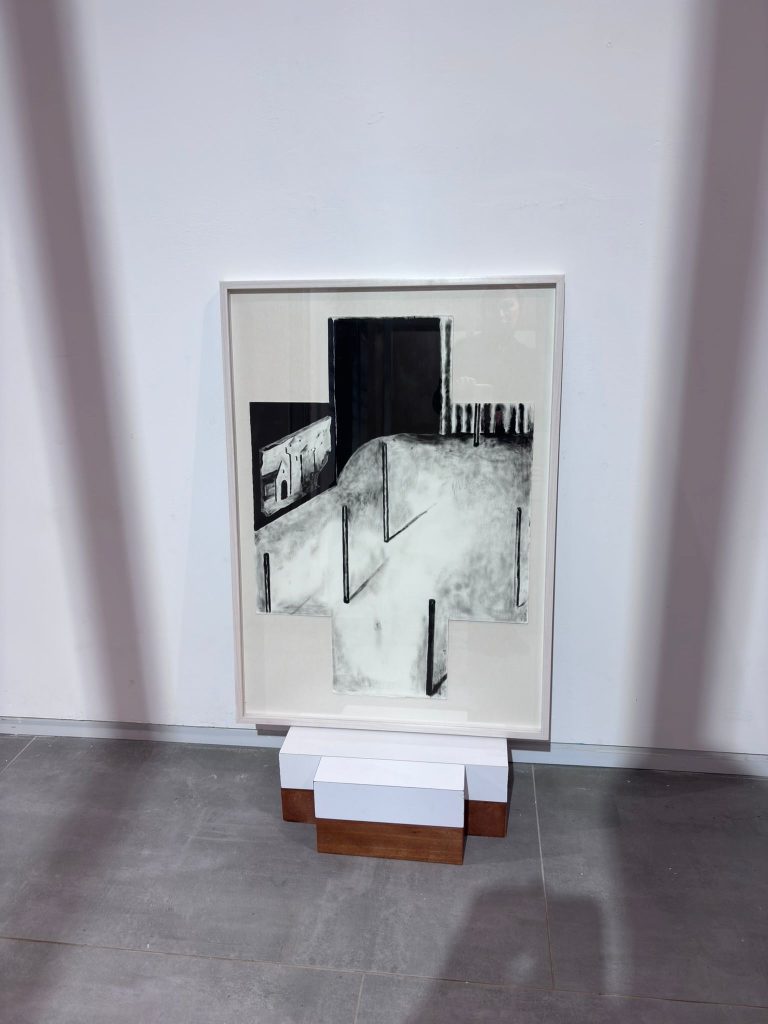
- Violence and death permeate every corner of this conceptual apartment in which sections of exposed drywall studs evoke a precarious, skeletal house. A monumental photograph of a belt all but c domestic violence, typically directed at women and children. In drawings recalling both Raymond Pettibon and Roee Rosen, bleak landscapes and graves are marked—redundantly, almost as a confirmation,,with the word “dead.” Scarves resembling those of football fan clubs—some notoriously violent—hang or lie draped on shelves; inscribed upon them, as if club names, are the words “pain,” “good,” and “evil,” the conceptual pillars addressed by the exhibition.
- Two dichotomous portraits—victim and perpetrator—act as a conceptual frame for the exhibition. At the entrance, a photograph of a smiling girl forms the center of a decorative clock, the sort of object purchased at mall kiosks. Installed on a long, empty wall, it acquires a disquieting charge: what is the relation between passing time and the girl’s image? Recognition of the violence of perforation—the impalement of the portrait—gradually registers as a near-symbolic crucifixion. (In conversation, Alon noted that the girl in the portrait is his sister; the clock was bought for her as a birthday gift when he was a teenager).
- The second portrait, of Alon himself, conjures a vampire, the mythical creature often depicted with blood dripping from his lips after biting his victim: he leans over a table on which a glass of water is standing, a thin, repellent trickle spilling from his mouth, with his fingernails painted yellow. The opaque, malevolent gaze and the glass in hand correspond consciously or not with A Clockwork Orange (1971, dir. Stanley Kubrick), where adolescent violence becomes an allegory for social disintegration, systems of control, and the pleasure of violence for its own sake. The association with the Roth murder is immediate, as are more recent horrors—from the October 7th massacre in the Gaza Envelope to contemporary reports of extremist settler violence by “Hilltop Youth” In the occupied territories.
Other portraits are insinuated: jeans suspended against a window mark an absent body; two clocks appear sketched onto a fogged pane. These unmistakably echo Untitled (Perfect Lovers) (1988) by Felix Gonzalez-Torres, in which synchronized clocks gradually fall out of alignment, like a lover who contracted AIDS. Notably, Chambon employs computerized knitting—a medium rare in Israeli practice—recalling the politically inflected computerized knitted works of Rosemarie Trockel from the 1980s and 1990s (along with her abstract work).
The exhibition’s meditation on evil rubs abrasively against contemporary reality. Beneath words, ideologies, and messianic preparations in the name of religion, what ultimately festers is distilled malevolence—akin to that of the adolescent killers. Evil as an experience has long magnetized artists. Like the entanglement of sex and death, so too the conjunction of evil and Romanticism—or evil and mystical Surrealism—remains perpetually seductive. Les Chants de Maldoror by Comte de Lautreamont, published in 1869 yet canonized as a classic after World War I’s orgy of senseless slaughter, charts a descent into cruelty and evil. Kubrick’s film reverberates again in the drawn musical staves and, more broadly, in the claustrophobic domestic setting—an enduring locus of terror.
Sex and death, a bitterly recurrent dyad, surface in the sculptural series “Boys”: geometric wooden figures recalling Joel Shapiro and avatars from the video game Minecraft. The figures, some in movement and others in sexualized poses, stage a scene of mechanized, faceless violence. Above them hangs a collaborative drawing of the “boys,” one adorned with a decorative mask—an accessory that evokes both the vampire image as crystallized in 19th century European Romanticism (Bram Stoker’s Dracula) and the period in which evil lurks in reality as in the refined sadism of the Marquis de Sade.
In Bewildered, Alon and Chambon generate a distinct frequency which isdistorted, cold, and calculated. It is finely tuned to induce discomfort, yet not of the kind that permits viewers to avert their gaze under the pretext of fragility. Rather, it resists the familiar alibi of oversensitivity—the excuse by which many deflect their eyes from the evil unfolding in their midst.
Curator: Eitan Buganim
Artists’ Studios, Tel Aviv