מחט המצפן החזותי נעה בפראות מצד לצד. אין מרכז ואין מנוחה בעבודה ללא כותרת של צוקי גרביאן, דיפטיך שכל סנטימטר מ 240 X 200 שהוא משתרע עליהם, מוצדק. זו עבודה שהמערבולת הרגשית, צורנית, צבעונית מחוללת את האלכימיה החמקמקה שהופכת ציור לרגע שנחרט בזיכרון.
הנרטיב של הציור מתעתע – ארבע דמויות, מספר רב של גולגולות וחלל שמסרב להיכנע לחוקי פרספקטיבה מרחב וזמן מקובלים. העבודה הציורית (וגרביאן הוא מהאמנים הישראלים המעטים שמזוהים דווקא עם רישום) מרשימה במשיחות חופשיות, כמעט פזרניות, כמשחק של נגיעה במקריות שיכול לנהל רק מי ששולט לחלוטין במדיה. בחלקים של הציור עולות אסוציאציות לציור של מרלן דומא או לצורניות השבורה – נוזלת של ססילי בראון Cecily Brown.
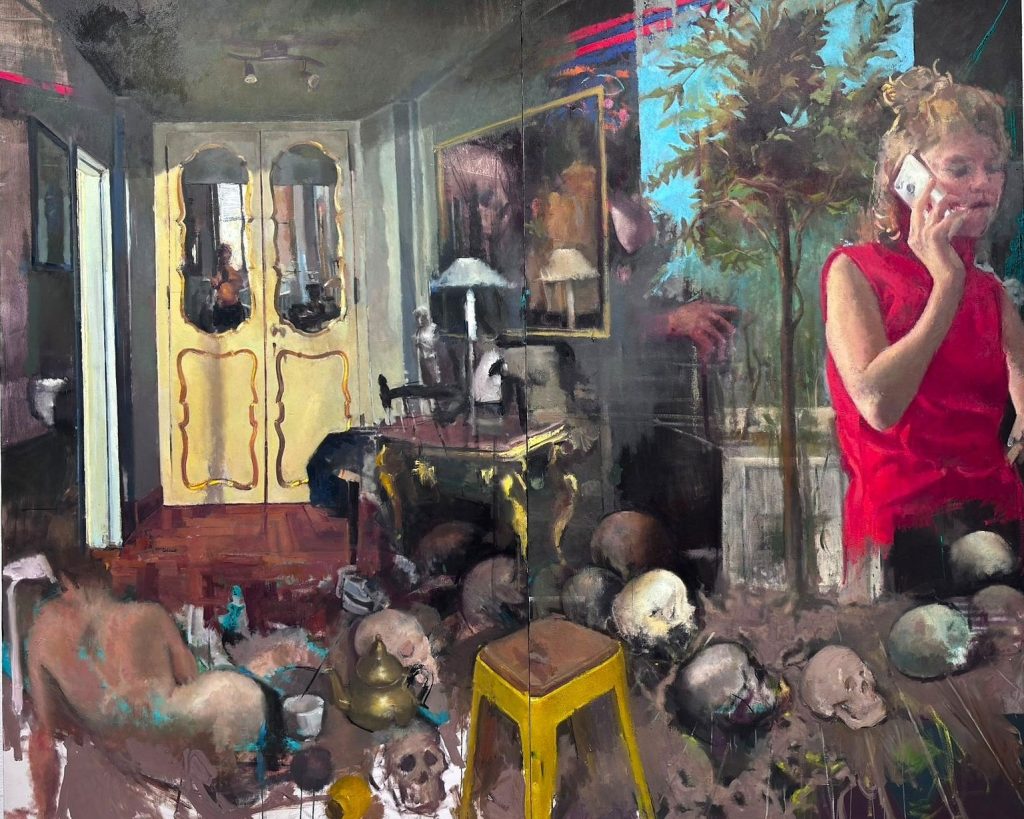
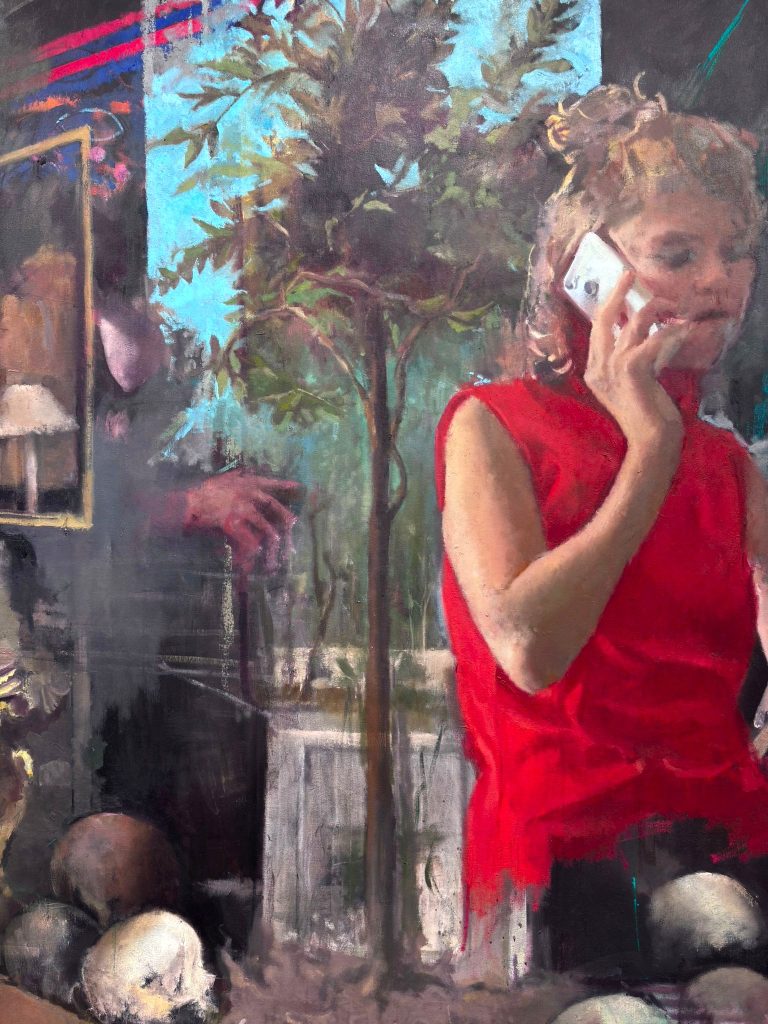
הציור רוחש – מבעבע במורפולוגיה של חלקיקים המצטרפים לכדי גופים מוכרים – קומקום מבהיק, מנורת שולחן או גוף אשה, שנמס לתוך לובן הבד ולתוך ציור הרצפה כאילו נמצאת במקום לא לה. מימין לדמות זו יד תלויה באוויר, מושטת -נשמטת. מעליה מבליח מרפק (?), רמזים לדמות רפאים שהייתה ונמחקה, או שהיווצרותה נקטעה, ולאחריה דמות אשה באדום, מוקד הציור, שהימצאותה בצידו הימני מטה את הציור כולו, מפירה את שיווי המשקל, מנכיחה את השיבוש והכאב והפצע אותו אומרות הגולגולות. חלק הגוף התחתון של האשה איננו, כאילו נמס או נתלש והאלימות הזו מבליטה עוד יותר את אדום השמלה כקשור לבגדי נידונים למוות בימי הבינים אבל גם צבע המקושר למריה לטבעה הגשמי ולפסיון. מכשיר סלולרי צמוד לאוזנה של אשישה וההבעה על פניה מצליחה להיות מרוכזת ואדישה בו בזמן.
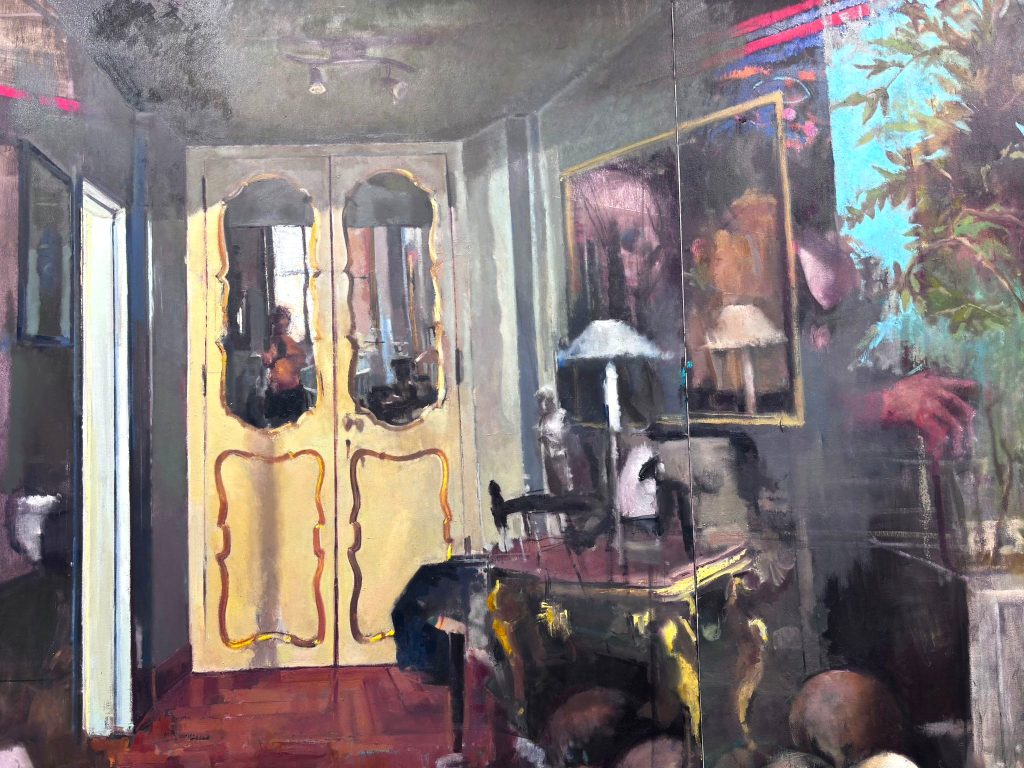
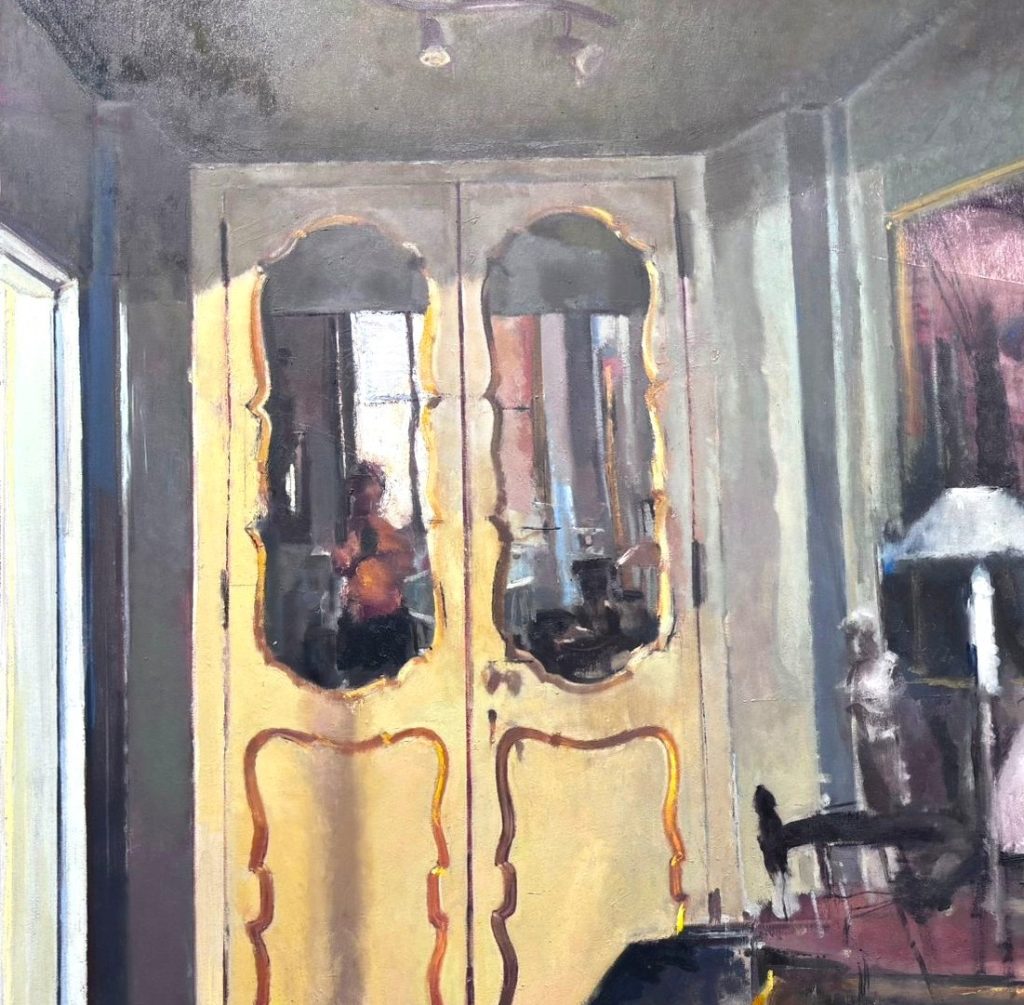
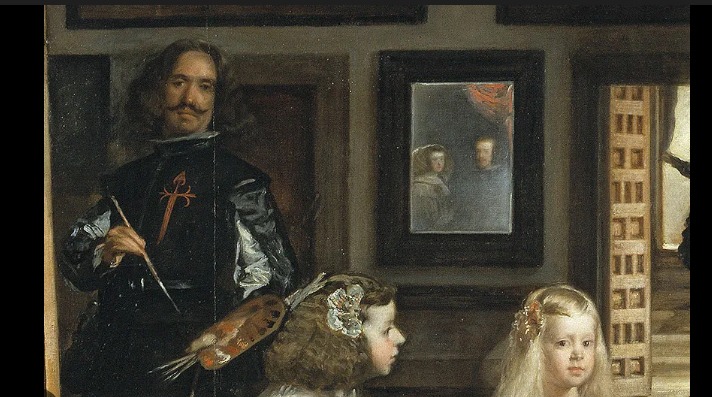
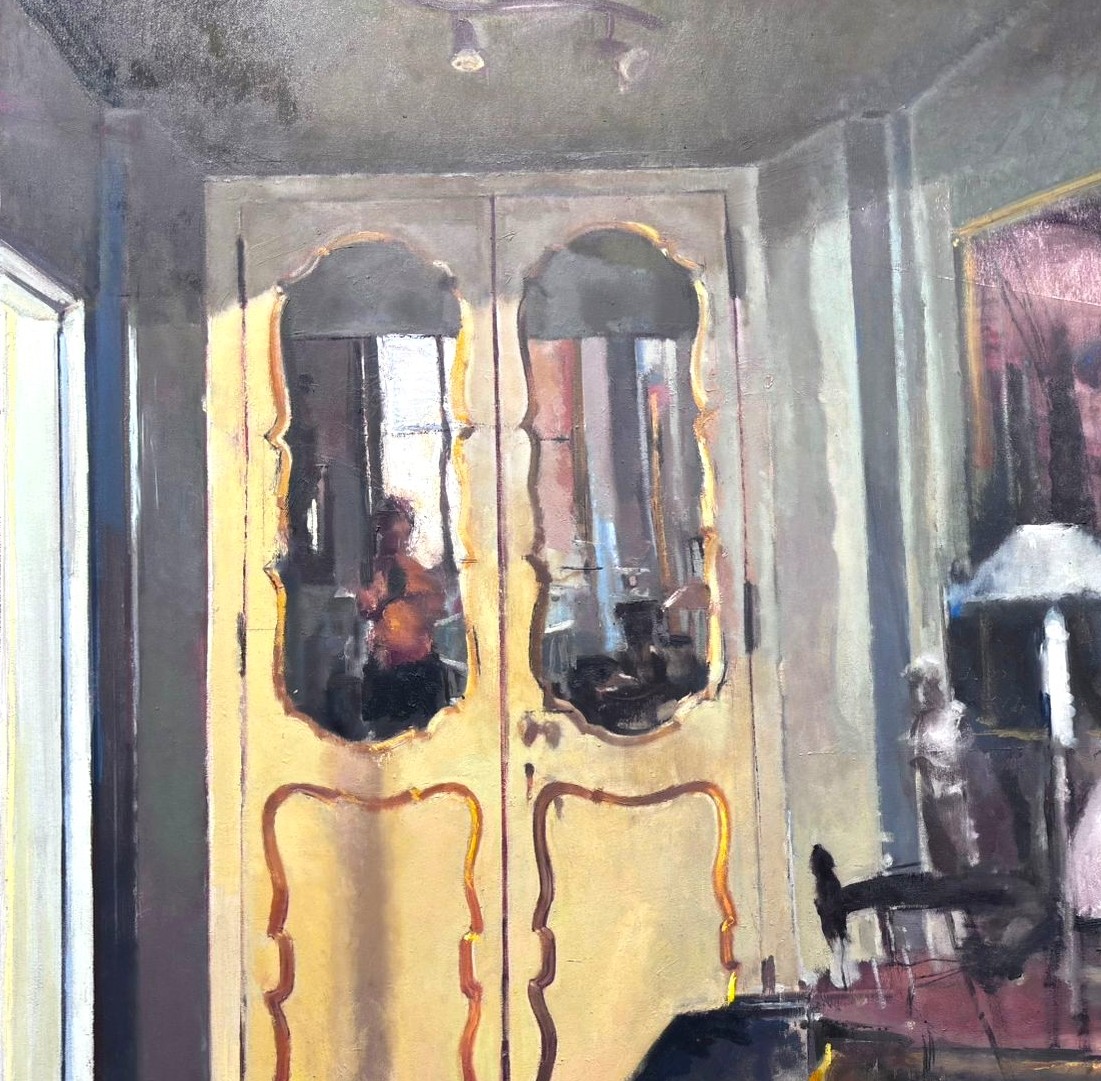
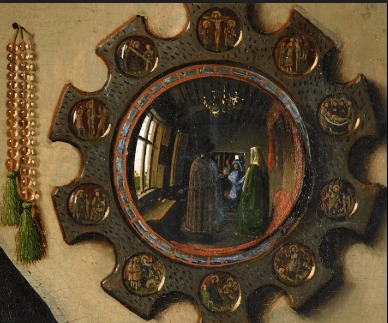
מאחורי חלונות זכוכית של דלת מעוטרות, מקרביו של חלל מוסתר, מתגלה דמות האמן המכוון מכשיר סלולרי לצילום החלל. גרביאן מחבר את דמות האמן בחתונת בני הזוג ארנולפיני The Arnolfini Portraitשל ואן אייק (1434), עם הצייר של ולסקז בלאס מנינאס Las Meninas ( 1656). אם דמות הצייר בנישואי ארנולפיני נמצא כעד בציור, מכפיל את המבט שהציור מדבר עליו הרי בלאס מנינאס ולסקאז מערער את נקודת המגוז של הציור והמראה משקפת דמויות שאינן בחלל בו מתרחש הציור (מישל פוקו כתב ניתוח מעניין על שאלת האובייקט, הסובייקט והמתבונן בציור הזה). גרביאן מתבונן מבחוץ והצלום במכשיר הסלולרי, שמופיע כאמור גם בידי האשה באדום, מצביע על אפשריות זליגת הסצנה, המידע, לעולמות הווירטואליים שמחוץ לציור שמהדהדים משנים ומעצבים מציאויות.
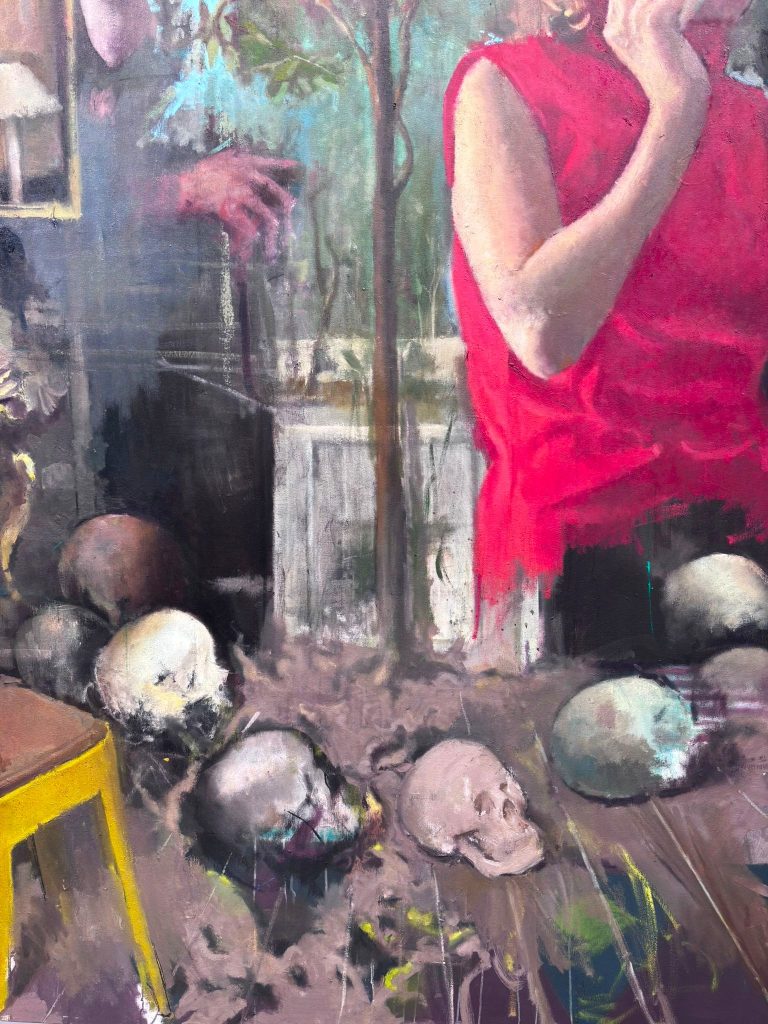
גולגולות, סמל המוות והסבל עמוסה לעייפה בתקדימים – מהגולגולת בבסיס הצלב על גבעת הגולגלתא, דרך המשחק בגולגלות של רוזנקרנץ וגילדנשטרן בהמלט של שייקספיר, גולגלות באינספור ציורי מומנטו מורי וואניטס, דרך היותה סמל נאצי ועד For the Love of God פסל הגולולות של דמיאן הרסט המצופה יהלומים. הגולגולת של גרביאן עולות ממעמקי החלל הציורי כאילו מחלחלות לתוכו, מפעפעות כמו רעל. בישראל, שנמצאת במלחמה רציפה קרוב לשלוש שנים המוות שפולש לחלל הביתי שמקיף ונושק לדמויות שמרחפות כמו רוחות וזיכרונות מכה בצופה.
מעניין לחשוב על הציור ללא כותרת של גרביאן גם ביחס לעבודה “השגרירים” של הולבין 1533, בה גולגולת מופיעה במרכז הציור רק כשהצופה בזווית מסוימת, כלומר כשהצופה משנה את “חוזה” הצפייה שמכתיבה מסורת הפרספקטיבה לעמוד כמרכז הציור, מול נקודת המגוז. עבודה שגם בה יש הסטה שלהתקפות עולה על הדעת במיוחד בשל המנורה המשתקפת במראה (מאחורי שולחן צד שעליו פסלונים) היא “הבר הפולי ברג’ר” A Bar at the Folies-Bergère של מאנה. מאנה יצר מתח מכך שנדמה תחילה שהמגישה בבר, הדמות המרכזית, מביטה ישירות בצופה אבל מבט מקרוב מערער את ההנחה.
בציור של גרביאן מרכז הקנבס אינו מרכז הכובד הוויזואלי, ההשתקפויות מסוכסכות. יחד עם עץ (ספק ציור קיר, ספק השתקפות מבחוץ), קווים אדומים של קרניז נעלם (ומיותר לדבר על משקל האסוציאציות לצמד המילים “קווים אדומים” ) משוח על הבד, יחד עם הצבעים ריאליזם קסום. בחלל המצויר הרוחות והמוות ובעיקר הספק המכרסם בקריאת המציאות דרים בו בכפיפה אחת.
גלריה רוטשילד , משה מאור 2 תל אביב
(צילומים: סמדר שפי )
On one painting in A Very Still Life | Tsuki Garbian
The visual compass moves wildly from side to side. There is neither a center nor a resting place in Tsuki Garbian’s untitled diptych, in which each centimeter of the 200 X 240 canvas is justified. This is a piece whose emotional, formal, and colorful mix generates the elusive alchemy that makes a painting into a moment engraved in the memory.
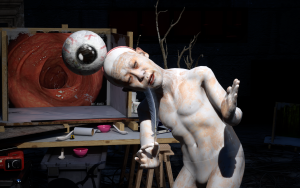
The painting’s narrative is illusory – there are four figures, a great many skulls, and a space that refuses to bow to the accepted laws of spatial perspective and of time. The painted work by Garbian, (one of the few Israeli artists known primarily for his drawings) is impressive in its free almost excessive brushstrokes, like a game of random contact that can be conducted only by someone who is in full control of the medium. In some parts of the paintings, associations arise to Marlene Dumas or Cecily Brown’s broken, fluid forms.
The painting has an active morphology of particles which converge to form familiar entities – a glistening kettle, table lamp, or the body of a woman, melting into the whiteness of the canvas and the painting of the floor, as if she is located in a place that she doesn’t own. To the right of the figure is an outstretched hand hanging in the air, above which an elbow (?) peeks out, hinting at a ghost figure that was there but was then erased or stopped in the middle of the process. Behind it is the figure of a woman in red, the focus of the painting. Her location on the right side tilts the entire painting, disturbing the equilibrium, making the disruption and pain present that are evoked by the skulls. The woman is missing the lower part of her body as if it melted or was torn away. This violence makes the red of her dress stand out even more, a color associated with the clothing worn by the condemned in the Middle Ages, but also the color associated with Mary in her human form and to the Passion. With a cellphone at her ear and her expression, she succeeds in being simultaneously concentrated and apathetic.
Behind the decorated glass doors of a cabinet, concealing its insides, the figure of the artist is revealed as he points his cellphone to the space to photograph it. Garbian connects the artist’s figure to The Arnolfini Portrait by Van Eyck (1434), and to Velazquez’s Las Meninas (1656). If the figure of the painter in the Arnolfini Portrait appears as a witness int he painting, doubling the gaze that the painting is speaking about, in Las Meninas Velazquez challenges the painting’s vanishing point, and the mirror reflects people who are not in the space in which the painting is taking place (Michel Foucault wrote an interesting analysis of the issue of the object, the subject, and the one who gazes in this painting). Garbian observes from the outside, while the photograph on his cellphone, which also appears in the hands of the woman in red, points to the possibility of the scene and the information leaking through into virtual worlds outside of the painting that resonate factors that change and shape realities.
The skulls, symbol of death and suffering which has been overused in precedents in art history – from the skulls at the base of the Cross on Golgotha Hill, through playing with the skulls of Rosendrantz and Guildenstern in Shakespeare’s Hamlet, skulls in innumerable memento mori (“Vanitas) paintings, its use as a Nazi emblem, through Damien Hirst’s diamond-encrusted skull he titled For the Love of God. Garbian’s skulls arise from the depths of the painterly space as if filtering down into it like poison. In Israel, undergoing continuous warfare over the past three years, death invading the domestic space surrounding and interfacing with the hovering figures like ghosts and memories leave a deep impression on the viewer.
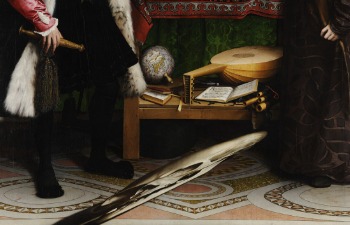
Interesting to think of Garbian’s untitled painting in relation to The Ambassadors by Holbein (1533) in which a skull appears at the center of the painting only when viewed from a certain angle, i.e., when the viewer breaches the traditional “viewing contract” in which perspective dictates that the viewer must stand at the center of the painting facing the vanishing point.
Due to the lamp reflected in the mirror (behind the side table with the figurines), the painting that comes to mind is Manet’s A Bar at the Folies-Bergère in which at first the central figure of the barmaid seems to look directly at the viewer but a close look subverts this assumption.
The skulls, symbol of death and suffering which has been overused in precedents in art history – from the skulls at the base of the Cross on Golgotha Hill, through playing with the skulls of Rosendrantz and Guildenstern in Shakespeare’s Hamlet, skulls in innumerable memento mori (“Vanitas) paintings, its use as a Nazi emblem, through Damien Hirst’s diamond-encrusted skull he titled For the Love of God. Garbian’s skulls arise from the depths of the painterly space as if filtering down into it like poison. In Israel, undergoing continuous warfare over the past three years, death invading the domestic space surrounding and interfacing with the hovering figures like ghosts and memories leave a deep impression on the viewer.
Tsuki Garbian, Untitled | Diptych, oil on canvas mounted on wood, 200*240 cm, 2026 (detail)
Interesting to think of Garbian’s untitled painting in relation to The Ambassadors by Holbein (1533) in which a skull appears at the center of the painting only when viewed from a certain angle, i.e., when the viewer breaches the traditional “viewing contract” in which perspective dictates that the viewer must stand at the center of the painting facing the vanishing point.
Due to the lamp reflected in the mirror (behind the side table with the figurines), the painting that comes to mind is Manet’s A Bar at the Folies-Bergère in which at first the central figure of the barmaid seems to look directly at the viewer but a close look subverts this assumption.
In Garbian’s painting, the center of the canvas is not the painting’s visual center of gravity, the reflections battle with each other. Along with the tree (which looks somewhat like a mural or maybe an outside reflection), are red lines of a disappearing cornice (not to speak of the associations to “red lines”) drawn on the canvas together with the magic realism colors. Dwelling together In the painted space are spirits, death, and doubt gnawing at the reading of reality.
Rothschild Gallery, Moshe Maor 3, Tel Aviv
Photos: Dr. Smadar Sheffi